
Dehumidifier sizing for basements, garages and crawl spaces
Affiliate disclosure: HVACDirect is an affiliate partner. Product links below use our affiliate tracking and may earn a commission at no extra cost to you. We have not hands-on tested these products; prices and specs are from HVACDirect's product pages as of November 14, 2026. See our affiliate disclosure.
Last reviewed: November 14, 2026.
- Capacity is rated in pints removed per day. It depends on the size of the space and how damp it is.
- For a basement at 50 to 60 percent humidity, Consumer Reports' chart (based on the 2020 DOE rating) says 20 pints for 400 sq ft, 25 for 600, 35 for 800 and 50 for 1,200 sq ft.
- ENERGY STAR's advice: it's better to oversize than undersize. Aim to hold indoor humidity at about 30 to 50 percent.
An undersized dehumidifier runs nonstop and never catches up; an oversized one pulls the humidity down quickly and cycles off. Texas and Gulf Coast garages, basements and crawl spaces can stay damp for months, so sizing right matters. Here is how to do it.
1. Measure the space and the dampness
- Square footage: length times width of the area you want to dry.
- Humidity: buy a hygrometer (Consumer Reports notes digital ones can cost as little as $10). A cool basement can feel less humid than it really is, so measure rather than guess.
- Condition: ENERGY STAR describes "slightly to moderately damp" (musty odor that may come and go), "very damp" (damp spots on walls and floors) and "wet" (sweating walls, seepage, or heavy loads like laundry drying).
2. Pick a size from the chart
These figures use the 2020 Department of Energy test, which rates machines at a cooler 65°F:
| Room humidity | 400 sq ft | 600 sq ft | 800 sq ft | 1,200 sq ft |
|---|---|---|---|---|
| 50 to 60% | 20 pints | 25 pints | 35 pints | 50 pints |
| 60 to 70% | 20 pints | 30 pints | 40 pints | 50 pints |
| 70 to 80% | 25 pints | 35 pints | 45 pints | 55 pints |
| 80 to 90% | 30 pints | 40 pints | 50 pints | 60 pints |
ENERGY STAR's own minimums for a portable unit in a space under 2,000 sq ft are 20 to 30 pints/day for slightly to moderately damp, 25 to 40 for very damp and 30 to 50 for wet. Go toward the high end if the space is cool or has an extra moisture load.
Compare ratings carefully. Because the test temperature dropped from 80°F to 65°F, a newer unit's pint number looks smaller than an older one's even if it performs similarly. Compare only units rated under the same standard.
3. Plan the drainage
- A bucket unit needs emptying; a 50-pint machine can collect over 7 gallons a day (Consumer Reports).
- Most larger units include a hose connection so water can flow to a floor drain or laundry drain by gravity.
- If the drain is higher than the unit, you need a condensate pump.
4. Cut the moisture at the source
- Extend downspouts away from the foundation and slope soil away from the house.
- Vent the clothes dryer outdoors and run bath fans (see our bathroom exhaust fan guide).
- Close doors and windows to the space while the unit runs.
Two picks (HVACDirect)
Prices were checked on hvacdirect.com on November 14, 2026 and change often. The first is a crawl-space or basement unit; the second is a small pump for floor-drain-free installs.
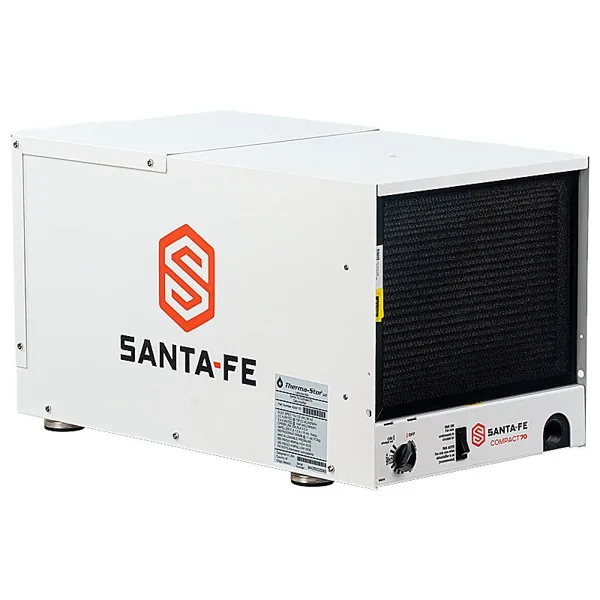
Santa Fe Compact70 Crawl Space Dehumidifier (SA8104)
$1,475
A low-profile, 115 V unit HVACDirect lists at 70 pints/day for crawl spaces and basements. Gravity drain, MERV-13 filter, ENERGY STAR certified and a 6-year warranty, per the listing. It's a premium, always-on unit, not a bucket dehumidifier. Check which test condition the 70-pint rating uses before comparing it with the chart.
View on HVACDirect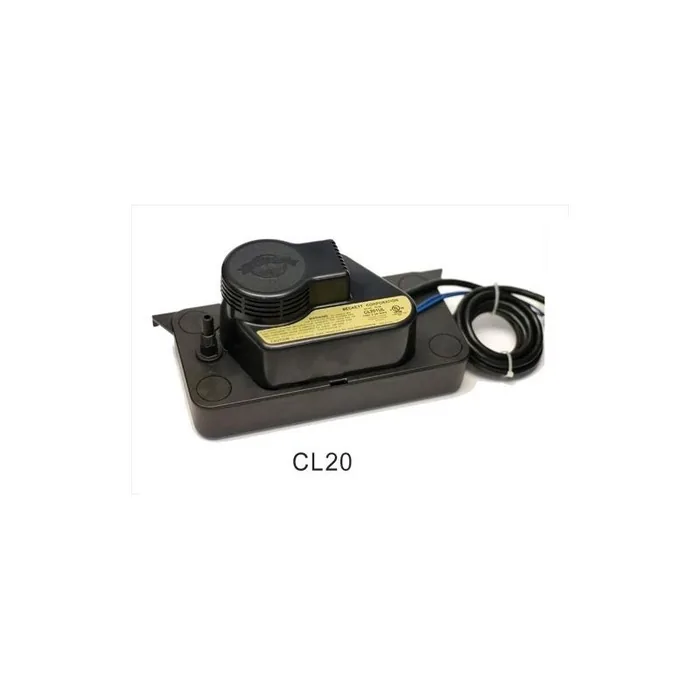
Beckett 20' Lift Low Profile Condensate Pump
$49.95
Budget add-on. Pumps condensate up and away when there's no floor drain at the right height. It's sold for air-conditioning condensate, so confirm the pump suits your dehumidifier's drain connection before you buy.
View on HVACDirectHVACDirect links above are affiliate links. Specs are the seller's and maker's claims; we have not tested them. Most homes need only a standard portable unit from a local store, and that is a fine choice for a damp garage or basement.
Bottom line
Measure the area, measure the humidity, pick the pint rating from the chart (round up), and plan where the water goes. If a space still stays wet after that, look for the moisture source: leaks, grading or missing vapor barriers. Related: whole-house humidifiers and AC condensate drains.
Sources
- ENERGY STAR: Dehumidifiers (capacity chart, oversize advice, 30 to 50% RH, humidistats)
- Consumer Reports: What size dehumidifier do I need? (sizing chart under the 2020 standard, hygrometer, drainage)
- HVACBase: What size dehumidifier do I need? (explains the 65°F vs 80°F rating change)
- HVACDirect product pages for the Santa Fe Compact70 and Beckett condensate pump: prices and specs (checked November 14, 2026)
Information only. Persistent dampness, mold or water entry can need a professional assessment.