
Bathroom exhaust fan replacement: CFM sizing, sones, ducting and humidity control
Affiliate disclosure: HVACDirect is an affiliate partner. Product links below use our affiliate tracking and may earn a commission at no extra cost to you. We have not hands-on tested these products; specs and prices are from HVACDirect's product pages as of November 13, 2026. See our affiliate disclosure.
Last reviewed: November 13, 2026.
- Size the fan at about 1 CFM per square foot of floor area for bathrooms up to 100 sq ft, with 50 CFM minimum (Home Ventilating Institute).
- For a quiet fan people will actually use, HVI suggests 1.0 sone or less.
- Code says bath exhaust must go outdoors, never into the attic, soffit or crawl space.
Texas bathrooms fight humidity most of the year. A weak or noisy exhaust fan leads to foggy mirrors, peeling paint, musty smells and mildew on the ceiling. Swapping an old fan for a quieter, properly sized one is a common weekend project when the existing duct and wiring are in good shape. Here's how to size it, what the code requires and what to check before you buy.
1. How much CFM do you need?
The Home Ventilating Institute (HVI), which certifies fan performance, recommends these intermittent rates:
- Under 50 sq ft: 50 CFM minimum.
- 50 to 100 sq ft: 1 CFM per square foot. A 7 x 10 ft bath needs about 70 CFM.
- Over 100 sq ft: add up the fixtures: 50 CFM each for the toilet, shower and tub, and 100 CFM for a jetted tub.
- An enclosed toilet room should have its own fan. Ceilings over 8 ft may need more airflow.
The 2021 International Residential Code (Table M1505.4.4) sets the legal floor at 50 CFM intermittent or 20 CFM continuous for bathrooms. Note a says the fan must deliver that rate at 0.25 inch of static pressure, so a fan rated only at 0.1 inch may move less air once it's ducted.
2. Sones: how loud is "quiet"?
- Sones are linear: a 2-sone fan sounds twice as loud as a 1-sone fan.
- HVI's examples: 4.0 sones is a TV at normal volume, 3.0 is typical office noise, 1.0 is a quiet refrigerator and 0.5 is rustling leaves.
- Look for the HVI-Certified label so CFM and sone ratings come from independent testing.
3. Code basics for venting
- IRC M1501.1 and M1505.2: exhaust air goes directly outdoors. It can't be dumped into an attic, soffit, ridge vent or crawl space, and bathroom air can't be recirculated.
- IRC R303.3: a bathroom without an openable window (at least 3 sq ft of glazing, half of it openable) needs a mechanical exhaust fan.
- IRC M1505.3: fans must be listed and labeled for their airflow.
- A fan installed over a tub or shower must be listed for that location, which typically means a GFCI-protected circuit. Check the fan's instructions.
4. Before you buy: what to check on your old fan
- Duct size. Most newer fans have a 4-inch outlet. Older fans often used 3-inch duct, and a smaller duct lowers airflow and raises noise.
- Where the duct ends. Go into the attic and follow it. If it stops in the attic or just points at a soffit vent, fix that first. The new fan won't help much otherwise.
- Housing size and joists. Measure the ceiling opening and the joist spacing. Some fans are designed for replacement and fit common old housings. Others need the hole enlarged.
- Controls. HVI recommends a timer or other control so the fan runs at least 20 minutes after a shower. A humidity-sensing or timer switch makes that automatic.
- Door gap. HVI calls for at least 3/4 inch under the door so makeup air can get in.
5. Replacement checklist
- Turn off the breaker and confirm the power is off with a non-contact voltage tester.
- Remove the grille and motor, then disconnect the wiring and duct. Work from the attic if the housing is nailed to the joists.
- Fit the new housing to the joists. Attach the duct to the collar with foil tape or a clamp, not cloth duct tape.
- Use the shortest, straightest run to the outside, with a backdraft damper and a proper roof or wall cap.
- Reconnect the wiring per the instructions, seal the housing to the drywall, install the grille and test with a tissue held to the grille.
Adding a new circuit, a fan in a new location or a new roof penetration is a bigger job. Many cities require a permit for that, so check locally or hire a licensed electrician or roofer.
Two fans to consider (HVACDirect)
Prices were checked on hvacdirect.com on November 13, 2026 and change often.
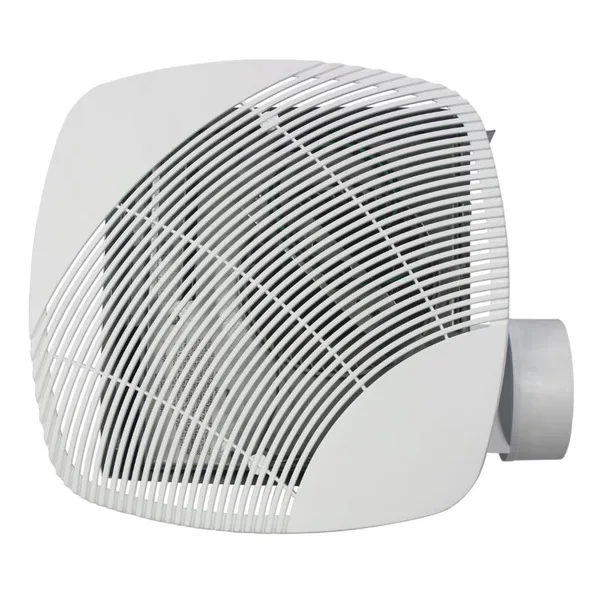
Maxx Air MS Series 70 CFM Ceiling Bath Fan (NXMS70)
$39.99
Budget pick for 45 to 85 sq ft baths. 70 CFM, 3.0 sones, 4-inch duct collar and built-in backdraft damper. Listed for over-tub/shower use on a GFCI-protected circuit (per HVACDirect).
View on HVACDirect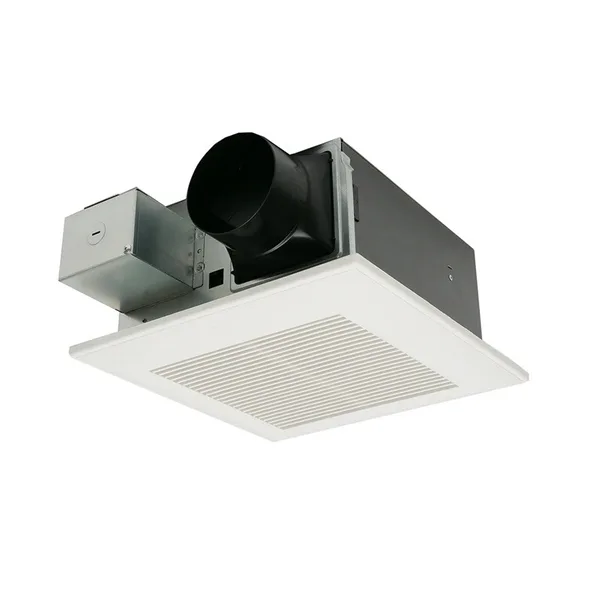
Panasonic WhisperFit DC Pick-A-Flow 50/80/100 CFM (FV-0511VF1)
$129.99
Quiet upgrade. Selectable 50, 80 or 100 CFM, about 0.8 sones on 4-inch duct, ENERGY STAR certified, low-profile housing for tight joists, with a 3-inch reducer included (per HVACDirect).
View on HVACDirectHVACDirect links above are affiliate links. Specs are the seller's and maker's claims, and we have not tested them. Sone ratings depend on the duct and the test static pressure, so compare fans on the same basis.
DIY or call a pro?
- Good DIY job: swapping a fan in the same spot, on the same switch, with an existing duct that already runs outdoors.
- Call a pro: for a new circuit or switch, a new roof or wall penetration, signs of water damage or mold in the ceiling, or any wiring you aren't sure about.
Bottom line
Pick a fan that matches your bathroom's square footage, aim for a low sone rating so it actually gets used, and make sure the duct ends outside. Put it on a timer so it keeps running after showers. That's what clears the moisture.
Related: whole-house humidifiers, AC condensate drains and float switches, and indoor/outdoor ceiling fans.
Sources
- Home Ventilating Institute: Bathroom exhaust fans (1 CFM per sq ft, 50 CFM minimum, sone examples, 1.0 sone guidance, 3/4-inch door gap)
- HVI: How much ventilation do I need? (fixture method, 20-minute run timer, 20 CFM continuous option)
- 2021 IRC Chapter 15 (via UpCodes): M1501.1 outdoor discharge, M1505.2 no recirculation, M1505.3 listed fans, Table M1505.4.4 local exhaust rates
- HVI FAQs (what sones and CFM ratings mean)
- HVACDirect product pages for Maxx Air NXMS70 and Panasonic FV-0511VF1: specs and prices (checked November 13, 2026)
Information only; not electrical or building-code advice. Follow the manufacturer's instructions and local code, and hire a licensed electrician when in doubt.