
Water softener maintenance checklist: salt, resin and the brine tank
Affiliate disclosure: SoftPro Water Systems is an affiliate partner. Product links below use our SoftPro referral tracking and may earn a commission at no extra cost to you. We have not hands-on tested these products; specs, claims and prices are from SoftPro's own product pages as of November 6, 2026. See our affiliate disclosure.
Last reviewed: November 6, 2026.
A salt-based (ion-exchange) softener is simple in concept and easy to neglect. Salt runs low, a bridge forms in the brine tank, iron fouls the resin, or the clock resets after a power blip—and hard water creeps back into fixtures and the water heater. This checklist covers the upkeep most homeowners can do themselves, what iron and chlorine do to the resin, and when it is time to call a technician. It is written for typical residential softeners nationwide, not just one brand or one state.
1. Know what you are maintaining
A cation-exchange softener has a mineral (resin) tank full of ion-exchange beads and a brine tank that holds salt and water. During regeneration, brine rinses calcium and magnesium off the resin so the softener can keep working. University extension guides (for example Nebraska and South Dakota) note that most homeowner maintenance is restocking salt, watching the brine tank, and making sure regeneration actually happens. If you have a salt-free conditioner instead, this salt-and-brine checklist does not apply—see our salt-based vs salt-free guide.
2. Salt level: check on a schedule
EPA WaterSense guidance on efficient softeners says to use sodium or potassium chloride pellets made for softeners (not rock salt, road salt or table salt), keep the brine tank roughly about half full, check salt every 4 to 6 weeks, and add salt before the level falls below about one-quarter full or below the water line. Running empty wastes water and energy on regenerations that cannot make brine, and it lets hard water through.
- Lift the lid and look—don't guess from the outside.
- Keep pellets above the waterline once dissolved salt has been drawn down.
- Avoid packing the tank to the rim; WaterSense notes that overfilling can encourage bridging.
3. Salt bridging and mushing
Salt bridging is a hard crust or dome of fused pellets that sits above the water so the salt never dissolves into brine. The pile looks full, but the softener regenerates with weak or empty brine. WaterSense describes breaking a bridge with a broom handle (carefully—don't puncture the tank) and then running a regeneration; hot tap water poured into the tank can help loosen stubborn clogs around the brine well.
Salt mushing (or sludge) is a wet, pasty layer at the bottom of the tank from fines, humidity or the wrong salt. Mush can clog the brine pickup. Scoop or vacuum it out during a brine-tank cleaning rather than adding more pellets on top.
Clue you have a problem: the salt level stops dropping over weeks, yet water feels hard again, or soap stops lathering.
4. Clean the brine tank on a cadence
How often depends on salt purity and local water, but a practical homeowner cadence is about once a year, or at least every few years as WaterSense suggests, when salt is nearly gone:
- Bypass or shut off the softener per the manual.
- Remove remaining salt and brine (shop vac helps).
- Wash the tank with warm soapy water; rinse well. Some makers allow a mild bleach sanitize—follow your manual.
- Check the brine well, float and air check / float assembly for salt crust (extension guides recommend inspecting the brine valve and float at least yearly).
- Refill with clean softener salt, let brine form, then run a regeneration.
5. Resin bed basics
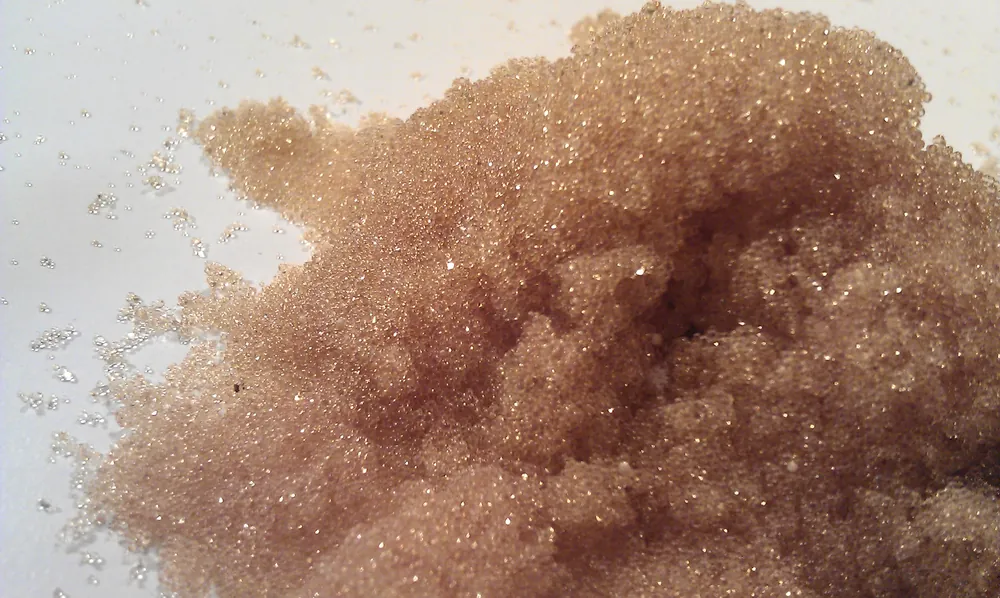
Resin beads swap hardness minerals for sodium (or potassium). They last for years when regenerated properly, but they foul. WaterSense recommends cleaning resin beads about annually using a cleaner the manufacturer allows—typically poured into the brine well, then followed by a regeneration. Iron, manganese and organic matter are common fouling agents; Nebraska Extension notes that high iron or manganese can cut exchange capacity until the resin is cleaned or replaced. City chlorine can also age resin over time; catalytic carbon ahead of a softener is the usual fix when chloramine or chlorine is high—see our chloramine, carbon and RO guide.
Signs the resin needs attention: softener is sized correctly and has salt, regenerations run, but hardness returns early, or you see rust staining that tracks with softener age on well water.
6. Iron, chlorine and why testing matters
- Iron (wells): stains fixtures, clogs resin and shortens softener life if untreated. Test before you blame the softener, and consider iron filtration upstream when levels are high.
- Chlorine / chloramine (city): disinfectant that protects the pipes but is hard on resin and rubber parts over years. Whole-house catalytic carbon is the common pretreatment.
- Hardness: confirm with a titration kit or lab if you are resizing or chasing a "softener not working" complaint—see the sizing calculator.
7. When to call a technician
- No brine draw, constant drain flow, or error codes after you have verified salt and broken any bridge.
- Valve that will not advance, or regenerations that never finish.
- Resin tank that has been in service for many years with heavy iron history—media replacement may be due.
- Leaks at fittings, the brine line or the drain that you cannot isolate safely.
- Any gas smell, sewage backup into the softener, or electrical issues at the control head.
8. Winter and vacation tips
- Vacations: WaterSense advises vacation mode, bypass, unplugging, or shutting the house water off for long trips so the unit does not waste salt and water regenerating an empty house. Reset the clock after outages.
- Power blips: many valves forget the time; wrong regeneration hours are a common "why is my water hard at 2 a.m.?" story.
- Cold garages: protect brine tanks and drain lines from freezing. A frozen brine line stops regeneration even if the salt looks fine.
- After a freeze or flood: inspect for cracked fittings before returning the softener to service.
Quick maintenance checklist
- Every 4–6 weeks: check salt; refill before it runs low.
- Whenever salt stops dropping: probe for a bridge; clear mush.
- About yearly: clean brine tank; inspect float/brine well; resin cleaner if the maker allows.
- After outages: verify clock and settings.
- Before blaming the softener: test hardness (and iron on wells).
Curated maintenance picks (2)
Two SoftPro products only: a low-cost salt-level monitor and a lab-style well test kit for diagnosing iron and hardness before you replace equipment. Prices were checked on softprowatersystems.com on November 6, 2026 and change often.
- SoftPro Smart Salt Level Sensor (SaltCo), $89 on softprowatersystems.com. This is the under-$100 pick. SoftPro describes a time-of-flight sensor that mounts on a brine-tank lid, connects over 2.4 GHz Wi-Fi, reports salt level in an app and sends low-salt alerts, with no monthly subscription. It is aimed at any standard brine-tank softener, not only SoftPro units. We have not tested accuracy; treat it as a reminder system, not a reason to skip opening the lid after installs or cleanings.
- SoftPro Well Water Test Kit, Basic kit $159 (Ultimate $269) on softprowatersystems.com. SoftPro lists the kit for hardness, iron, pH and TDS—the numbers that decide whether you need iron treatment, a softener resize or something else. Useful before you buy well gear or when resin fouling is on the table. City-water homes can often start with a utility CCR and a hardness check instead; see how to read a water quality report.
SoftPro links above are affiliate links. Specs and prices are SoftPro's own claims as of November 6, 2026; we have not laboratory-verified the sensor or the test kit.
Where this fits in the house
Maintenance keeps a softener you already own working. If you still need to choose or size one, start with the SoftPro softener guide, the sizing calculator and salt-based vs salt-free. For how softeners sit next to carbon filters and RO, see filter vs softener vs RO. Scale on a tankless heater is a related upkeep job—how to flush a tankless water heater. Softener products are listed under Products.
Bottom line
Keep salt above the waterline, break bridges early, clean the brine tank on a yearly cadence, and treat resin cleaner and water testing as preventive tools—especially on iron wells or chlorinated city water. Use vacation mode on long trips, reset the clock after outages, and call a tech when the valve, brine draw or leaks are beyond a lid-and-broom-handle job.
Sources
- U.S. EPA WaterSense: Soften Water Without Wasting It (water softener selection and maintenance guide) (salt refill cadence; bridging and clogging; resin cleaning; brine-tank cleaning; vacation/outage tips)
- University of Nebraska–Lincoln Extension: Drinking Water Treatment: Water Softening (Ion Exchange) (brine-tank inspection; iron/manganese effects on resin; regeneration/backwash notes)
- South Dakota State University Extension: Treatment Systems for Household Water Supplies — Softening (salt restocking; periodic brine-tank cleaning; brine valve/float checks)
- USGS Water Science School: Hardness of Water (hardness classes)
- SoftPro Smart Salt Level Sensor and Well Water Test Kit product pages: specs, claims and prices (checked November 6, 2026)
Information only; not plumbing advice. Follow your softener manual for bypass, cleaning chemicals and winterizing. For well contamination concerns, use a certified lab and local health guidance.