
Push-fit shutoff valves: how to replace a leaky sink or toilet stop valve
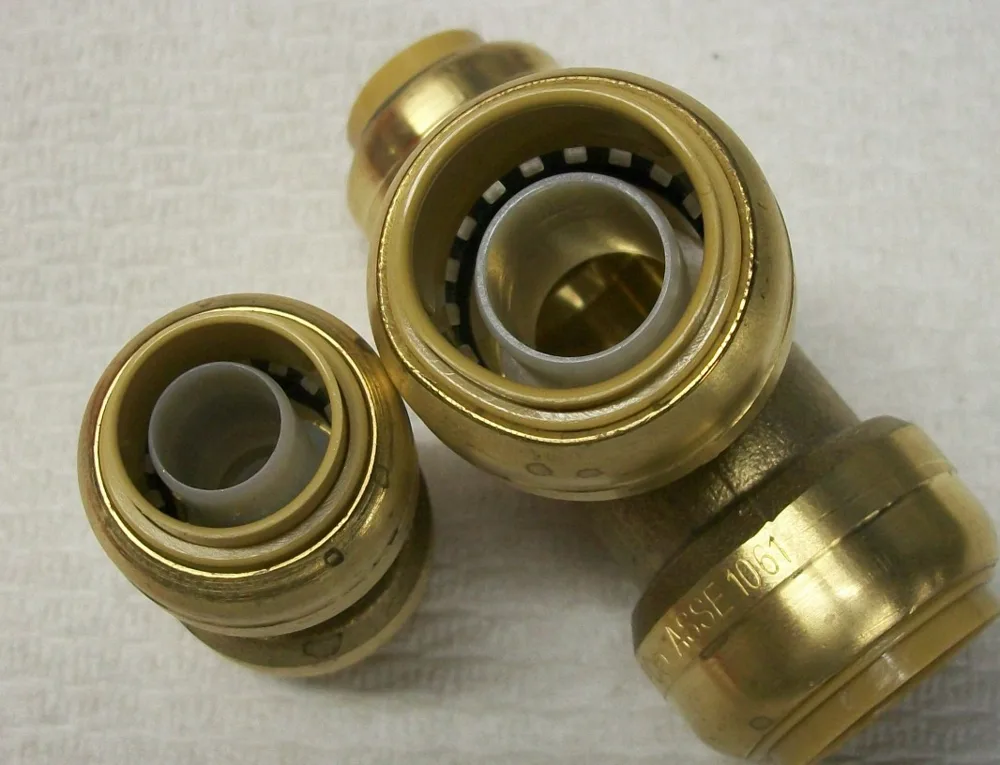
Affiliate disclosure: iSpring is an affiliate partner. Product links below use our affiliate tracking and may earn a commission at no extra cost to you. We have not hands-on tested these products; specs and prices are from iSpring's own product pages as of November 12, 2026. See our affiliate disclosure.
Last reviewed: November 12, 2026.
- A stop valve that drips at the stem, won't turn, or won't fully shut off is worth replacing. It's the valve you need in an emergency.
- Push-fit valves work on copper, CPVC and PEX pipe (copper-tube-size), with no soldering or glue. They don't fit galvanized steel.
- Most installs come down to a square cut, a deburred end and a depth mark. Skipping any of those causes most leaks.
The small chrome valve behind your toilet or under your sink is called a stop valve or angle stop. Most people never touch it until a faucet or toilet needs work. That's when they find out it's frozen open or weeps at the handle. Push-fit valves let a careful homeowner swap one in minutes without a torch. Here's how to tell if yours should go, what to check before you buy, and how to install one the way the manufacturers describe.
1. Why these valves matter (and what code says)
- The 2021 International Residential Code, section P2903.9.3, requires shutoff valves on each fixture supply to every plumbing fixture and appliance except bathtubs and showers. The valves must be accessible.
- P2903.9.4 requires valves to be compatible with the pipe material. Valves for drinking water must meet NSF 61.
- The federal Safe Drinking Water Act defines "lead free" as a weighted average of no more than 0.25% lead across wetted surfaces of pipes, fittings and fixtures, according to EPA. Look for "lead-free" on any valve you buy.
2. Signs it's time to replace a stop valve
- Water weeps from the handle stem or packing nut when the valve is turned
- The handle won't turn, or turns but water keeps flowing to the fixture
- Green or white crust around the valve body or compression nut
- You're already replacing a faucet, toilet fill valve or supply line, which is the easiest time to swap the stop too
Older multi-turn stops are often the culprits. Quarter-turn valves like the ones below go from open to closed with a 90-degree turn of the handle.
3. Check these before you buy
- Pipe material. IRC P2906 allows push-fit fittings only on copper-tube-size CPVC, PEX, PE-RT and copper tubing. If the pipe coming out of your wall is threaded galvanized steel or brass, you need a threaded valve instead.
- Pipe size. Most sink and toilet supply stubs are 1/2-inch nominal. Measure or compare to a known fitting before buying.
- Outlet size. Most faucet and toilet supply lines connect with a 3/8-inch compression nut, which is what the angle stop below has.
- Angle vs straight. Pipe coming out of the wall needs an angle stop. Pipe coming up through the floor or cabinet bottom usually needs a straight stop.
- Standards. IRC P2906 says push-fit fittings must conform to ASSE 1061. Check the packaging or listing for that mark, along with lead-free and NSF 61 claims.
- Enough pipe. You need a straight, round, undamaged stub long enough to reach the fitting's full insertion depth after you cut off the old valve.
4. How to install a push-fit valve (manufacturer steps)
These steps follow SharkBite's published push-to-connect installer guide, which describes the same basic process used by most push-fit brands. Always follow the instructions for the brand you buy.
- Shut off the water at the main and open a faucet to relieve pressure. Keep a towel and bucket under the old valve.
- Remove the old valve. On a compression stop, the brass ring (ferrule) usually stays stuck on the pipe. Many people cut the pipe just behind it with a tubing cutter, as long as enough stub remains.
- Square cut. SharkBite says to cut the pipe square and perpendicular. A tubing cutter does this better than a hacksaw.
- Deburr copper or CPVC so no sharp edge can nick the O-ring. Wipe away dirt, and check the pipe for scratches.
- Mark the insertion depth on the pipe using the maker's depth chart or gauge.
- Push the valve on until the mark meets the edge of the release collar. If the mark doesn't reach, the pipe isn't fully seated.
- Connect the supply line to the compression outlet, turn the water back on slowly, and check for drips at both connections over the next day.
About PEX: SharkBite's 1/2- to 1-inch fittings have a built-in PEX stiffener. Check whether your brand includes one or needs an insert.
About removal: Push-fit valves come off with a matching disconnect clip or tool. SharkBite calls its brass push fittings a permanent connection that isn't designed for repeated reuse. iSpring says LittleWell fittings can be separated and reused with its removal tool. Either way, inspect the pipe and fitting before reconnecting.
Two push-fit valves under $25 (iSpring LittleWell)
Prices were checked on ispringfilter.com on November 12, 2026 and change often. Coupon code REFISPRING may apply at checkout.
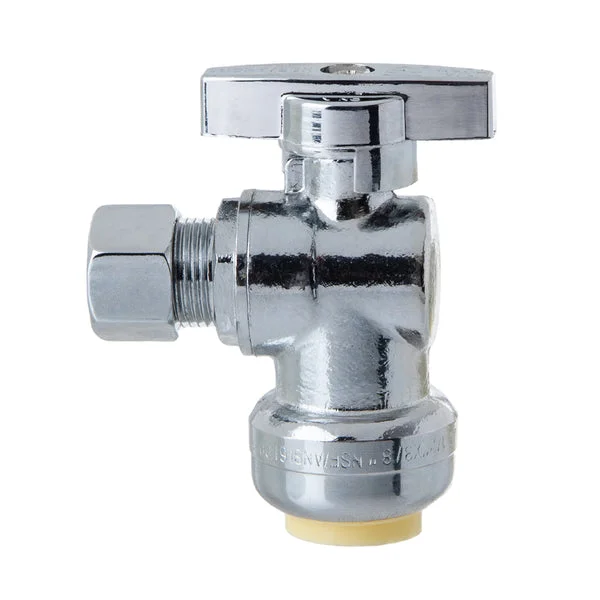
LittleWell AASPF8CP6 Push-Fit Angle Stop (1/2" push x 3/8" comp.)
$16.99
Lead-free brass, chrome finish, quarter-turn metal handle. Fits copper, CPVC or PEX (per iSpring). The everyday swap behind a toilet or under a sink.
View on iSpringCode REFISPRING
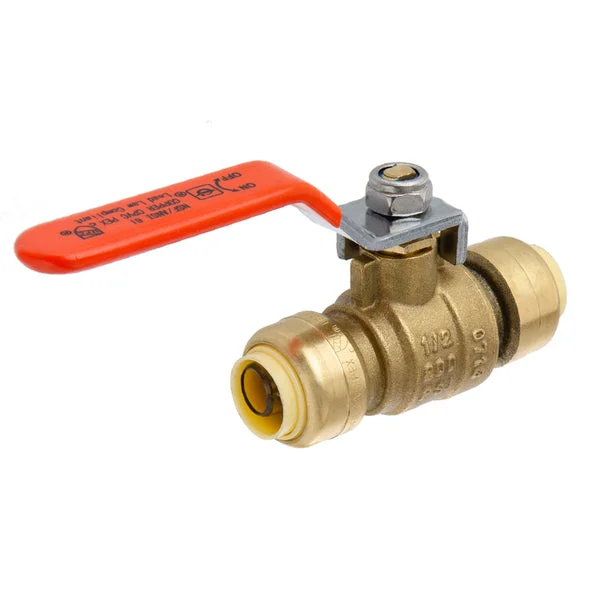
LittleWell ABPF8 1/2" Push-Fit Ball Valve
$20.99
Lead-free brass inline ball valve with a lever handle. Joins copper, CPVC or PEX (per iSpring). Handy for adding a shutoff on a branch line during a repair.
View on iSpringCode REFISPRING
iSpring links above are affiliate links. Specs are iSpring's own claims, and we have not tested them. iSpring's listings don't mention ASSE 1061, so check the packaging if your inspector requires it.
DIY or call a plumber?
- Good DIY job: swapping a stop valve on clean, round copper, CPVC or PEX with enough stub length, when the house main shuts off reliably.
- Call a pro: if the main valve won't fully close, the stub is short, corroded or out of round, the pipe is galvanized, or the leak is inside the wall.
- Keep it reachable: code requires these valves to stay accessible, so don't bury push-fit fittings behind drywall unless the maker and your local code allow it.
Bottom line
A stop valve you can't trust is a small problem until the day you need it. Check your pipe type and size, get a lead-free quarter-turn valve with the right outlet, and follow the cut, deburr, mark and push routine. It's one of the most useful quick plumbing upgrades in a house.
Related: automatic water shutoff valves and leak detectors, water heater expansion tanks and T&P valves, and under-sink reverse osmosis.
Sources
- 2021 IRC Chapter 29 (via UpCodes): P2903.9.3 fixture shutoff valves, P2903.9.4 valve requirements and NSF 61, P2906 push-fit fittings (ASSE 1061; CTS copper, CPVC, PEX, PE-RT only)
- EPA: Use of lead free pipes, fittings, fixtures, solder and flux for drinking water (0.25% weighted-average lead definition)
- SharkBite push-to-connect installer pocket guide (2024) (square cut, deburr, depth mark, disconnection, reuse cautions)
- SharkBite installation instructions (2020) (integral PEX stiffener)
- iSpring product pages for LittleWell AASPF8CP6 and ABPF8: features and prices (checked November 12, 2026)
Information only; not plumbing advice. Follow the manufacturer's instructions and local plumbing code, and hire a licensed plumber when in doubt.