
Pressure washer buying guide for home upkeep: PSI, GPM, and electric vs gas
Affiliate disclosure: A-iPower (AiPower) is an affiliate partner. Product links below use our affiliate tracking and may earn a commission at no extra cost to you. We have not hands-on tested these machines; prices and specs are from aipower.com listings as of November 15, 2026 and change often. See our affiliate disclosure.
Last reviewed: November 15, 2026.
- PSI is force, GPM is flow. Multiply them for cleaning units (PSI × GPM) to compare machines: 2,000 PSI at 1.2 GPM is 2,400; 3,400 PSI at 2.4 GPM is 8,160.
- A light electric washer (about 1,500 to 2,000 PSI) handles patio furniture, grills, cars, fences and most routine rinsing. A gas washer (about 3,000 PSI and up) is for driveways and sidewalks and is overkill for most siding.
- Matching the pressure to the surface matters more than owning the biggest machine. Vinyl siding guidance tops out around 1,500 PSI with a wide tip, held level, never aimed upward.
A pressure washer is one of the few outdoor tools that can make a house look years younger in an afternoon, and also one of the easiest ways to chew up wood, drive water behind siding, or cut a finger. This guide covers the numbers, which surfaces tolerate what, and where each type fits.
1. PSI, GPM and cleaning units
PSI (pounds per square inch) is how hard the water hits. GPM (gallons per minute) is how much water flows, which carries loosened dirt away and sets how fast you finish a big flat area. Multiply the two to get cleaning units (CU). Popular Mechanics gives the example of a 2,000 PSI, 2.0 GPM machine at 4,000 CU versus a 1,500 PSI, 3.0 GPM machine at 4,500 CU, the second of which can actually clean faster despite the lower pressure. For scale, an average garden hose is only about 40 psi.
| Class | Typical pressure | Good for |
|---|---|---|
| Light duty (electric) | about 1,300 to 2,000 PSI | Cars, boats, patio furniture, grills, light deck and siding rinsing |
| Medium duty | about 2,000 to 2,700 PSI | Concrete, siding (with a wide tip, from a distance), decks |
| Heavy duty (gas) | about 2,700 to 4,000 PSI | Driveways, sidewalks, stripping paint; too much for most siding and wood |
The ranges above come from the medical literature's own description of consumer machines (cars and boats at 1,300 to 2,000 PSI, heavy-duty units at 2,700 to 4,000 PSI). Use the machine's rated numbers, not a "max" figure printed in large type.
2. What each surface can take
| Surface | Guidance |
|---|---|
| Vinyl siding | Wide (about 40 degree) fan tip, wand held at eye level and pointed straight at the wall, not up. Georgia-Pacific's vinyl siding care page allows roughly 1,500 to 2,400 PSI; other installers advise staying near or under 1,500 PSI. Some siding makers don't want pressure washers used at all, so read the warranty. |
| Fiber cement | James Hardie's published care guidance asks for wide fan tips kept at least 6 feet from the wall and pressure under 1,500 PSI. A low-pressure rinse and soft brush is the safer default. |
| Wood siding, fences and decks | Low pressure only (a contractor guide puts decks and fences at roughly 500 to 1,500 PSI), keep the tip moving and a foot or more away, and follow the grain. Too much pressure raises fibers and gouges softwood. |
| Stucco | Soft wash only; texture traps water and pressure can push moisture into cracks. |
| Concrete and pavers | The best use of a stronger machine (roughly 2,500 to 4,000 PSI). Keep a consistent distance to avoid striping. |
Always spray downward on siding. The lapped panels shed water running down; spray up and you can drive water behind them, where it can feed hidden mold. Be careful around window and door openings, outdoor outlets, and the vented soffits that open into your attic. Test on an inconspicuous spot first.
3. Electric or gas?
- Electric: lighter, quieter, no fuel or exhaust, and easy to store. Lower pressure limits the damage you can do to siding and decks. It needs a nearby outlet (use a GFCI-protected circuit) and a hose connection. The right pick for most suburban houses.
- Gas: more pressure and flow, no cord, and much faster on big driveways and long sidewalks. It is heavier, louder, needs fuel and basic engine care, and must be run outdoors only, away from windows and doors. Unless you have lots of concrete, most homes will use it far less than expected.
Whichever you choose, check the hose length, the number of quick-connect nozzles (0, 25 and 40 degree tips plus a soap tip are standard), and whether the unit has a detergent tank. Hard water leaves spots on glass and finishes after you wash; see our whole-house filter vs softener guide if spotting is a constant problem. A pressure washer is also handy for cleaning wood or metal gates before you swap hinges; see the fence gate hinge and latch guide.
4. Safety basics
- High-pressure water can inject into skin. A 2023 analysis of U.S. emergency department data estimated about 15,300 high-pressure injection hand injuries from 2012 to 2021, and 90% of them were from pressure washers (the rest from paint sprayers). Fingers were the most common site, and injuries peaked in late spring and summer. Never test the spray with your hand or foot, and never point it at anyone.
- Wear closed-toe shoes and eye protection. Keep children and pets away, and don't leave a machine within reach of kids; the safety literature includes a case of a child hurt after treating the wand like a garden-hose nozzle.
- Run gas engines outdoors only, and let them cool before refueling.
Two A-iPower options
Prices and "in stock" status were checked on aipower.com on November 15, 2026 and change often. Both are available to order with the Add to cart button on the listing.
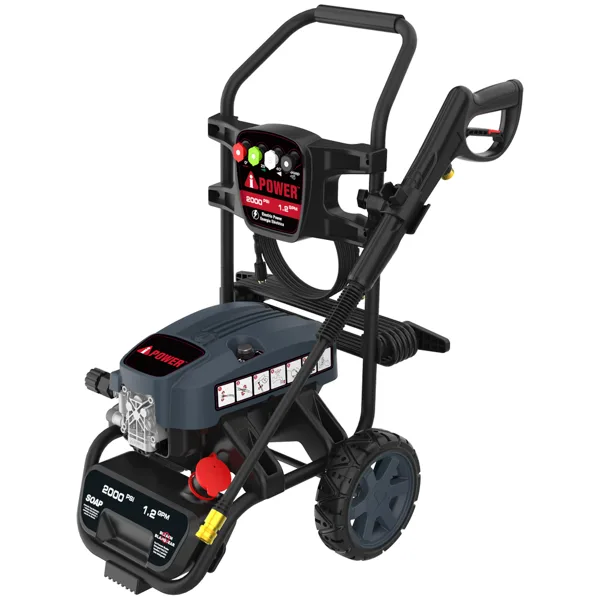
A-iPower APW2000E 2000 PSI Electric Pressure Washer
$139.99 (listing shows a regular price of $259.99)
The easy first machine: 2,000 PSI at 1.2 GPM (about 2,400 cleaning units), a 25-foot hose, four nozzles with a soap tank, and a GFCI-equipped power cord. Plugs into a standard outlet, so there's no engine to maintain.
View on AiPower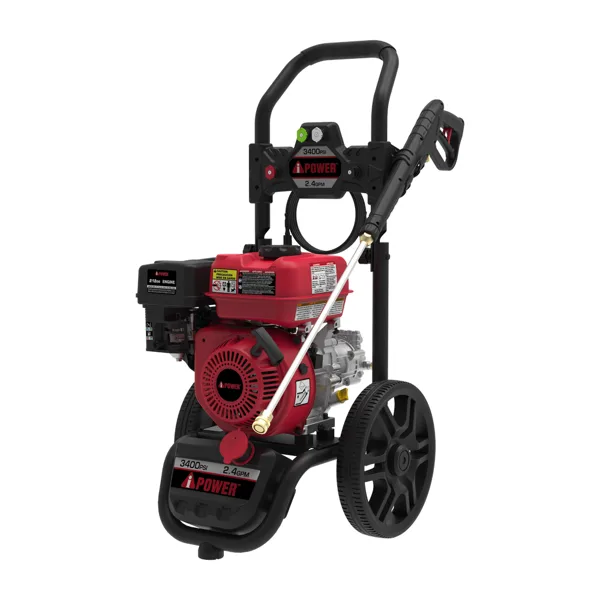
A-iPower GPW3400 3400 PSI Gas Pressure Washer
$399.00 (listing shows a regular price of $499.00)
For big concrete jobs: 3,400 PSI at 2.4 GPM (about 8,160 cleaning units) with a 212cc OHV engine, a 35-foot hose and five quick-connect nozzles. At this pressure use a wide tip and keep well back from siding, or skip siding entirely.
View on AiPowerAiPower links above are affiliate links. Specs and prices are the seller's and maker's claims; we have not tested them. If you only wash a car, a patio and a fence a few times a year, renting a machine or borrowing one is a perfectly good choice.
Bottom line
Decide what you will clean most. For siding, decks, cars and furniture, a modest electric washer used with a wide tip from a distance is plenty. Reserve a gas machine for large concrete areas, and respect the safety rules either way: the water jet is the hazard, not just the dirt.
Sources
- Popular Mechanics: GPM and PSI, how to pick a pressure washer (cleaning units = PSI × GPM)
- PowerWash.com: Cleaning units explained (PSI vs GPM roles)
- PubMed: High-pressure injection injuries of the hand, incidence and trends (NEISS, 2012 to 2021)
- International Journal of Emergency Medicine: High-pressure water injection injury (machine pressure classes, garden hose about 40 psi)
- Georgia-Pacific Vinyl Siding: Care and maintenance (hold the washer level, 40-degree tip, do not aim upward)
- James Hardie homeowner care guide (wide fan tip, 6 feet from the wall, under 1,500 psi)
- Mr. Handyman: How to clean siding without damaging it (pressure limits by siding type)
- AiPower product pages for the APW2000E and GPW3400: prices, specs and availability (checked November 15, 2026)
Information only; not safety, construction or medical advice. Follow the manufacturer's instructions, and seek emergency care right away for any high-pressure water injury, even if the wound looks small.