
How to connect a portable generator: cords, inlet boxes, transfer switches and interlocks
Affiliate disclosure: AiPower is an affiliate partner through the Impact network. Generator links below are Impact tracking links and may earn a commission at no extra cost to you. We have not hands-on tested these units. Specs and prices are from aipower.com as of November 13, 2026. See our affiliate disclosure.
Last reviewed: November 13, 2026.
- There are two safe ways to use a portable generator: plug appliances into it with a heavy-duty, outdoor-rated extension cord, or have a licensed electrician install a listed transfer switch or interlock kit plus an outdoor power inlet. Never plug a generator into a wall outlet ("backfeeding").
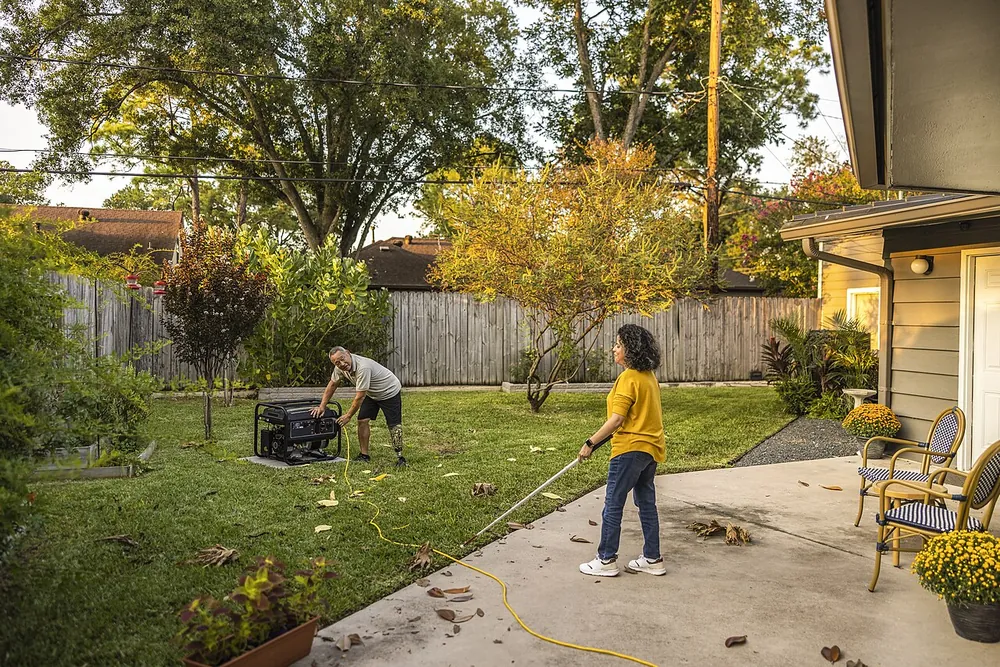
- The U.S. Consumer Product Safety Commission says to run a generator outdoors only, at least 20 feet from doors, windows and vents, with the exhaust pointed away from the house. Use battery or battery-backup CO alarms.
- Cords must be outdoor-rated, three-prong, free of damage, and rated in watts or amps for the total load. They also have to be long enough to keep the generator that 20 feet out.
- Any connection to house wiring is permitted, inspected electrical work. This guide is not electrical advice.
A portable generator can keep a fridge, lights, medical device or well pump running in an outage, but only if you hook it up safely. The two risks that cause the most harm are carbon monoxide from the exhaust and backfeeding house wiring, which can electrocute a utility worker or a neighbor. This guide covers the safe plug-in method, how to size a cord, what an inlet box and transfer switch actually do, and when an interlock kit is an alternative—plus which AiPower models are sold direct for those jobs. For sizing a generator versus a battery power station, start with the home backup power guide.
1. Safety first: outdoors, 20 feet, no backfeeding
- Outdoors only. CPSC and CDC say never to run a generator in a home, garage, basement, crawlspace, shed or similar space, even with doors or windows open or a fan running. Carbon monoxide can build up in minutes and has no color or smell.
- Keep it at least 20 feet from the house. CPSC's portable-generator safety alert says to place the unit at least 20 feet from doors, windows and vents that could let exhaust indoors, and to point the exhaust away from the building. The cord has to reach that far.
- CO alarms. Install battery-operated or plug-in CO alarms with battery backup, and test them. CPSC cites UL 2034 (or the equivalent Canadian standards listed in its alert) as the certification to look for. If you feel sick, dizzy or weak, get to fresh air right away.
- Never backfeed. Do not plug a generator into a wall outlet, dryer receptacle or any other household receptacle. CPSC, ESFI, OSHA and the Red Cross all warn that this can energize utility lines and kill people working on them. It also bypasses some of the home's built-in circuit protection.
- Stay dry; shut down before refueling. CPSC says to keep the generator dry (an open, canopy-like structure on a dry surface is the example it gives—not a garage or tented enclosure against the house) and to dry your hands before touching it. ESFI says to turn the generator off and let it cool before refueling, and to store fuel in labeled containers away from living areas.
A carbon monoxide sensor on the generator is a useful backup. It does not replace outdoor placement, distance from the house, or working CO alarms inside.
2. Two safe ways to get power into the house
Plug-in backup means you carry or roll the generator outside, start it, and plug appliances into its outlets with outdoor-rated cords. Nothing is connected to your electrical panel. This is the method most homeowners can do themselves, and it is the right choice for a fridge, a few lamps, a router or a window AC, as long as the cords and the generator's watt rating can handle the load.
Panel hookup means selected house circuits (or, with an interlock, the whole panel under your control) get power through a transfer switch or interlock and an outdoor inlet box. That is the only safe way to feed hardwired loads like a well pump, furnace blower or hardwired lighting. ESFI strongly recommends that a licensed electrician install a home generator connection so it meets local electrical codes. The Red Cross says a transfer switch used to connect a generator to house wiring should be installed in accordance with the National Electrical Code (NEC), published by NFPA, and with state and local codes.
3. Extension cords: rating, gauge and length
CPSC's safety alert is specific: connect appliances with heavy-duty extension cords designed for outdoor use; the wattage rating of each cord must exceed the total wattage of everything plugged into it; the cord must be long enough to keep the generator outdoors and far from openings; check the whole length for cuts or tears; use a three-prong plug; and protect the cord if it passes through a window or doorway so it is not pinched. ESFI and OSHA give the same load-rating and three-prong advice, and ESFI also recommends a GFCI to reduce shock risk.
- Match the outlet. A 120 V, 20 A receptacle can supply up to 2,400 watts (120 × 20). A 120 V, 30 A RV-style outlet (TT-30) can supply up to 3,600 watts. A 120/240 V, 30 A outlet (common on larger portables) can supply up to 7,200 watts. The cord and any adapter have to be rated for that amperage, not just "heavy duty" in marketing copy.
- Use the shortest cord that still keeps the generator 20 feet out. Extra length adds voltage drop, which can overheat a cord or starve a motor. Follow the cord's listed rating and the generator manual; do not splice indoor lamp cord onto an outdoor lead.
- One load path. Do not daisy-chain cords or pile power strips on the end of a generator lead. Plug the appliance, or a single outdoor-rated cord, into the generator.
- Watch starting watts. A fridge or well pump may draw two or three times its running watts for a second at start. Size both the generator and the cord for that surge, using the appliance nameplate and the generator's starting-watt rating.
If you only need to run a few plug-in appliances, this is the whole hookup. Skip the panel work unless you have a reason to feed hardwired circuits.
4. Power inlet box
An outdoor power inlet is a weatherproof inlet (often a locking 30 A or 50 A receptacle, depending on the generator) mounted on the exterior wall. A listed generator cord plugs the generator into the inlet; from there, wiring runs to a transfer switch or to a generator breaker in a panel that has an interlock. You never run a cord through a window to a dryer outlet.
Placement has to work with the 20-foot rule. The inlet should sit where a cord can reach a generator that stays at least 20 feet from doors, windows and vents. That often means a longer inlet whip or a carefully chosen wall, not an inlet next to a window with the generator on the porch. A licensed electrician will size the inlet, the cord type, the breaker and the wire run, and will apply the warning label required for a generator inlet under the NEC.
This is not a DIY add-on. Cutting into the service panel or running a feeder is licensed work, and most jurisdictions want a permit and an inspection.
5. Manual transfer switch vs interlock kit
Both devices exist to do one job: keep utility power and generator power from being connected at the same time. That is what prevents backfeed. NEC Article 702 covers optional standby systems, which is the category that includes most portable-generator hookups. IAEI Magazine's UL Question Corner quotes NEC 702.5: transfer equipment must be suitable for the intended use and installed so it cannot inadvertently interconnect the normal and alternate sources. Local amendments and the inspector (the authority having jurisdiction) still have the last word.
- Manual transfer switch. A separate, listed switch (evaluated to UL 1008 for transfer switch equipment, per the same IAEI article) feeds a fixed set of circuits that were wired to it. You start the generator, plug it into the inlet, and throw the switch. The circuits on the switch are the only ones that get generator power, which makes overload less likely if the electrician sized the set to the generator.
- Panel interlock kit. A mechanical slide or plate on your existing panel makes it physically impossible to turn the main breaker and the generator breaker on at the same time. IAEI notes that interlock kits are treated as transfer equipment under NEC 702.5 when they are investigated with the panelboard (UL 67) and the panel is marked for that specific kit. The kit has to match your panel's make and model. A generic unlisted plate is not a substitute. With an interlock you can, in principle, power any circuit in the panel, but you have to manage the load yourself so you do not overload the generator.
- Automatic transfer switches are the usual path for a permanently installed standby generator, not for a portable you roll out during a storm. They are still licensed electrical work.
Have a licensed electrician pull the permit, install a listed device for your equipment, add the outdoor inlet, and walk you through the startup sequence (utility off, generator on, transfer; then the reverse at shutdown). Do not work in the panel yourself, and do not let anyone "just backfeed the dryer outlet."
6. Sizing watts before you hook up
List what you actually need in an outage. Add running watts for everything that will be on at once, then make sure the generator's starting watts cover the hardest motor start. A compact inverter in the 2,000 running-watt range can often handle a fridge, lights and chargers on extension cords. A 120/240 V conventional portable is the usual choice if you want an electrician to feed a well pump, a central-air blower or a 240 V circuit through a transfer switch or interlock. When in doubt, give the electrician your load list and the generator's rated watts; do not assume a 30 A inlet means you can turn the whole house back on.
Portable generators you can buy direct (AiPower)
These five are sold with an Add to cart button on aipower.com as of November 13, 2026. Watt figures are AiPower's published starting/running specs. We have not tested runtime. There is no AiPower promo code right now. All of them run outdoors only.
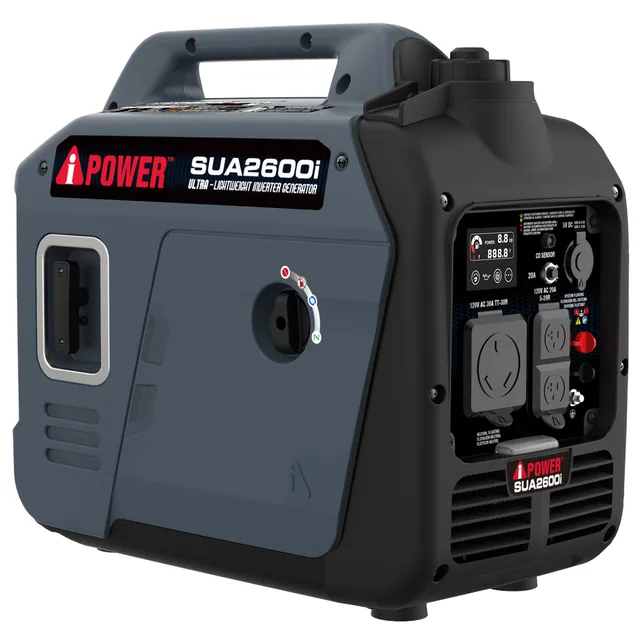
A-iPower SUA2600i 2600W Inverter Generator
$399.99 (was $549.99)
Gasoline inverter with a built-in CO sensor. 2,600 starting / 2,000 running watts, 120 V with a TT-30R RV outlet, about 37.4 lb, parallel-capable. A compact plug-in pick for a fridge, lights and chargers.
View on AiPower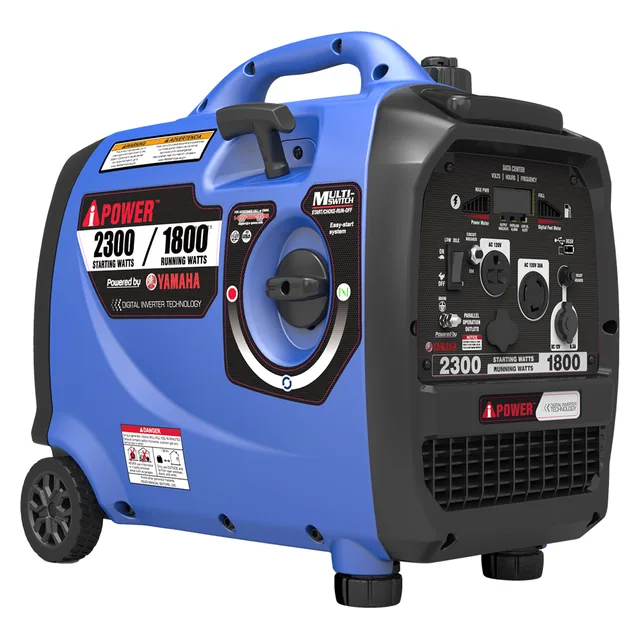
A-iPower SC2300i 2300W Inverter Generator (Yamaha engine)
$519.99 (was $799.99)
Gasoline inverter with an 80cc Yamaha engine. 2,300 starting / 1,800 running watts, 120 V, about 50.7 lb, parallel kit included. Another compact cord-and-outlet option.
View on AiPower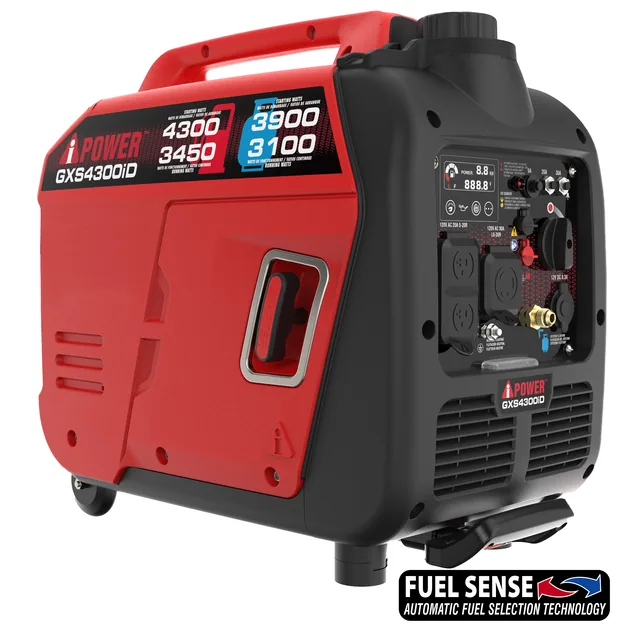
A-iPower GXS4300iD 4300W Dual Fuel Inverter Generator
$549.99 (was $849.99)
Dual fuel inverter with a CO sensor and auto shutdown. Gas: 4,300 starting / 3,450 running W. Propane: 3,900 / 3,100 W. About 54.8 lb. More headroom for a fridge plus a window AC or a small well pump on a cord, still 120 V.
View on AiPower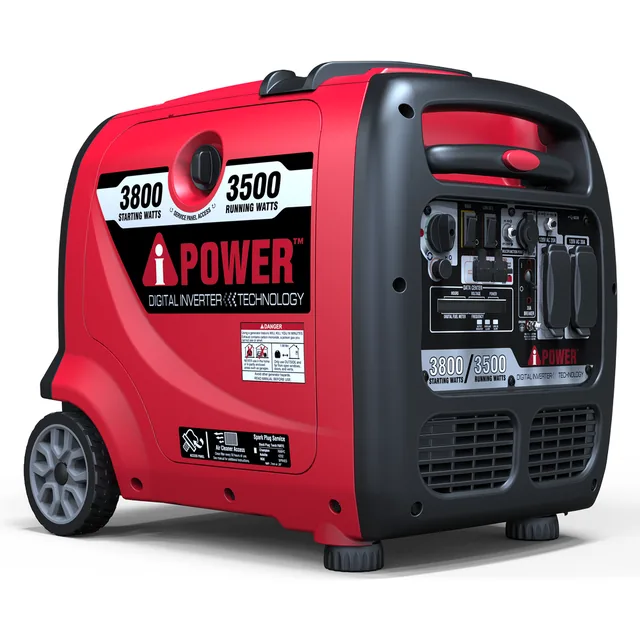
A-iPower SUA3800i 3800W Inverter Generator
$659 (was $999.99)
Gasoline inverter. 3,800 starting / 3,500 running watts, 120 V with two 20 A outlets and a 30 A locking outlet. About 121 lb on wheels. The 30 A outlet is the usual match for a TT-30-style cord; confirm the inlet and cord with your electrician if you use a transfer switch.
View on AiPower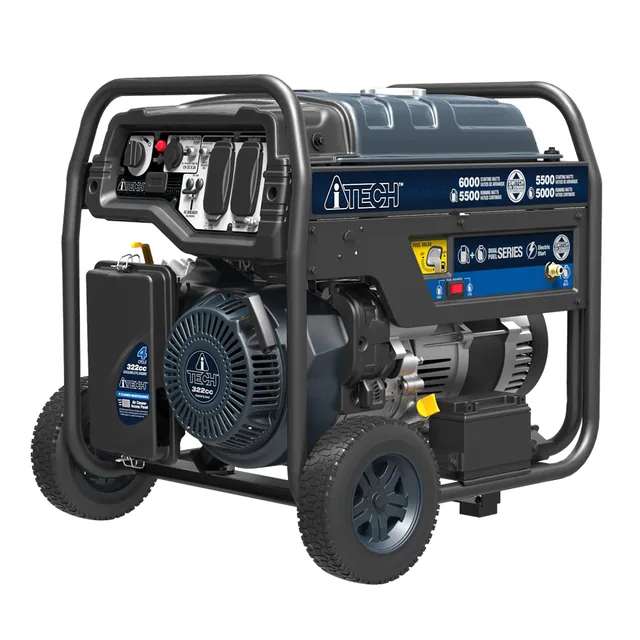
A-iPower AT10-260001 6000W Dual Fuel Portable Generator
$599.99 (was $849.99)
Conventional open-frame generator, not an inverter, so expect it to be louder. Dual fuel with electric start and a CO sensor. Gas: 6,000 starting / 5,500 running W. Propane: 5,500 / 5,000 W. 120/240 V and 30 A connections, about 158 lb. The 240 V outlet is the one that can feed a typical residential inlet and transfer switch or interlock—have an electrician match the inlet to this unit.
View on AiPowerBrowse other models on the AiPower store. All five are also listed under Products → Portable generators (AiPower) and in the backup power guide.
AiPower links above are affiliate links via Impact. Prices are as of November 13, 2026, so check aipower.com for the current price. Specs are the manufacturer's, and we have not tested runtime. Generators run outdoors only, and any panel hookup needs a transfer switch or interlock installed by a licensed electrician.
DIY or call an electrician?
- Good DIY job: rolling the generator outdoors, keeping it at least 20 feet from openings, and plugging appliances in with a correctly rated outdoor cord. Read the manual for starting, grounding as the maker specifies, and refueling.
- Call a licensed electrician (permit and inspection): any inlet box, transfer switch, interlock kit, generator breaker or other connection to the house panel or to a 240 V circuit. Hardwired well pumps, furnaces and similar loads belong on that list.
Bottom line
If you only need a fridge and a few plugs, a correctly rated outdoor extension cord and a generator kept 20 feet from the house is the whole setup. If you want house circuits to come back on, budget for a listed transfer switch or a panel-matched interlock, an outdoor inlet, a permit and a licensed electrician—never a suicide cord in a wall outlet. Size running and starting watts before you buy, and treat carbon monoxide as a first-line hazard, not an afterthought.
Related: home backup power stations and portable generators, router and internet backup power, whole-house surge protectors, and garage door openers with battery backup.
Sources
- U.S. Consumer Product Safety Commission, Generators and Engine-Driven Tools and Portable Generator Hazards safety alert (PDF) (outdoors only; 20-foot distance from doors, windows and vents; heavy-duty outdoor-rated cords whose wattage rating exceeds the connected load; three-prong plugs; no backfeeding; CO alarms; dry operation)
- CDC, Carbon Monoxide Poisoning Basics and What to Do During a Power Outage
- Electrical Safety Foundation International, Portable Generators (licensed electrician; transfer switch; no direct connection to household wiring; outdoor-rated cords rated for the load; GFCI; CO alarms; cool-down before refueling)
- OSHA, Using Portable Generators Safely (PDF) (qualified electrician and transfer switch before attaching a generator to a building's electrical system; grounded, load-rated cords)
- American Red Cross, Safe Generator Use (transfer switch installed to the NEC and local codes; no backfeeding; outdoor-rated cords)
- IAEI Magazine, UL Question Corner, listed transfer equipment and panel interlock kits (NEC 702.5 wording; interlock kits as transfer equipment when investigated with the panel under UL 67; transfer switches under UL 1008)
- AiPower product pages for the SUA2600i, SC2300i, GXS4300iD, SUA3800i and AT10-260001 (specs and prices checked November 13, 2026)
Information only; not electrical, medical or emergency-planning advice. Follow the manufacturer's manuals. Hire a licensed electrician for any panel, transfer switch, interlock, inlet or 240 V work, and confirm medical-device power requirements with the device maker.