
Hard water and tankless water heaters: scale, flushing and warranty terms
Affiliate disclosure: SoftPro links below use our referral ID and may earn a commission at no extra cost to you. We have not hands-on tested these products; prices are from SoftPro's own product pages as of November 9, 2026. See our affiliate disclosure.
Last reviewed: November 9, 2026.
A tankless water heater pushes water through a small heat exchanger at high temperature. When that water is hard, calcium and magnesium carbonate drop out as scale on the hottest surfaces, which is exactly where a tankless unit does its work. Scale cuts efficiency, raises error codes and can eventually crack or burn out the exchanger. Most tankless makers also write water quality into their manuals and warranties, so hard water is not just a maintenance issue; it can decide whether a repair is covered. This guide explains the hardness numbers that show up in those documents, how often to flush, and what kind of treatment actually satisfies them.
1. Know your hardness number first
Hardness is reported two ways: milligrams per liter (mg/L, the same as ppm) or grains per gallon (gpg). Divide mg/L by 17.1 to get gpg. The U.S. Geological Survey classifies water as soft at 0–60 mg/L, moderately hard at 61–120 mg/L, hard at 121–180 mg/L and very hard above 180 mg/L. City customers can usually find hardness in the utility's annual water quality report (see our guide to reading a water quality report); well owners need a lab or kit test. Write the number down before you shop for anything.
2. What the tankless makers' documents say
Manufacturers don't all use the same wording, and terms change between models and years, so treat this as a map and read the manual and warranty for your model. Based on published summaries of current manuals and warranties:
- Rinnai: the installation manual's water quality table lists total hardness up to 200 mg/L (about 11.7 gpg), says hard water must be treated and may need more frequent flushing, and states that damage from lime build-up is not covered. Rinnai also calls for an annual inspection by a licensed professional.
- Navien: the NPE installation manual lists a maximum total hardness of 200 mg/L (printed as 12 gpg), recommends a softener or Navien's scale-prevention system at 4–9 gpg, calls it highly recommended at 9–12 gpg and required above 12 gpg, and says damage from poor water quality is not covered.
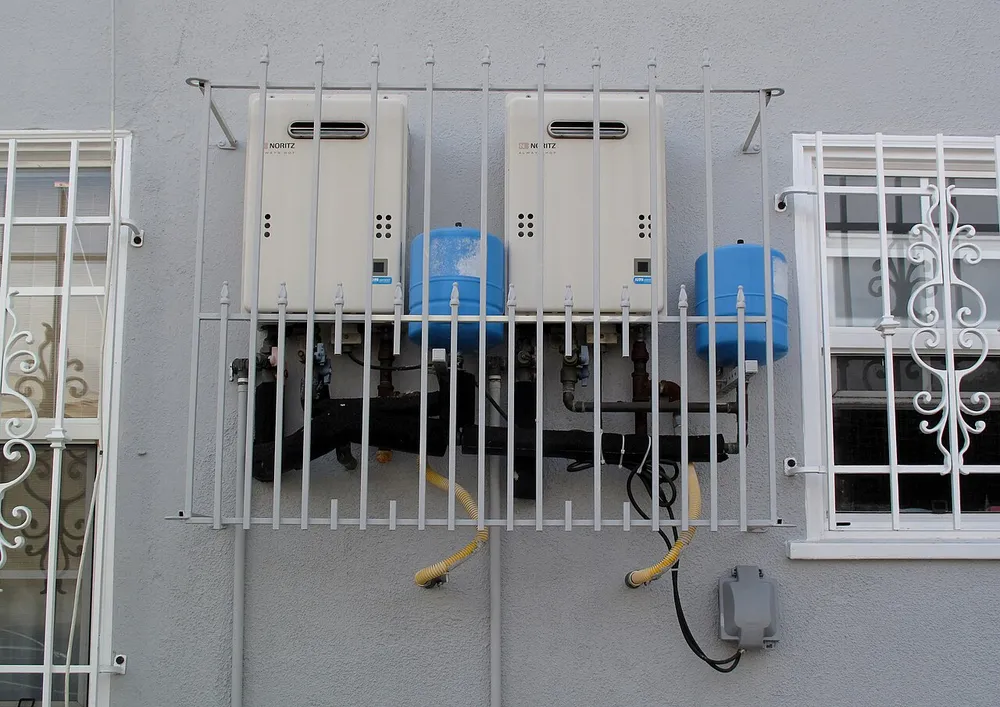
- Noritz: the warranty excludes damage from water with hardness above 12 gpg (200 mg/L) and says scale problems are not covered.
- Takagi and some A.O. Smith models: published warranty summaries show a lower 7 gpg (120 mg/L) line for single-family homes.
The common thread: scale prevention is the owner's job. If your water is above your maker's line, plan for treatment, not just flushing.
3. Flushing intervals by hardness
Flushing (descaling) circulates a descaling solution through the heat exchanger with a small pump. Navien's manual bands the schedule by hardness: no routine flush at 0–4 gpg, and about once a year for residential use in the 4–12 gpg range when water is untreated. Rinnai's SENSEI manual lists no flush at 0–60 mg/L and once a year for residential use at 61–160 mg/L. Many units also show a service reminder or a scale-related error code when it's time. Our step-by-step tankless flush guide covers the isolation valves, solution choices and safety steps. Navien warns that incorrect descaling can itself void coverage, so follow the manual exactly or hire a pro if you're unsure.
4. Softener vs salt-free conditioner for a tankless heater
A salt-based softener uses ion exchange to swap calcium and magnesium for sodium (or potassium). A working softener brings measured hardness close to zero, which directly meets a "hardness up to 200 mg/L" or "12 gpg" line. None of the big makers' documents we reviewed exclude softened water. Softening does not fix pH, iron, chloride or total dissolved solids, which also appear in the water quality tables.
A salt-free conditioner (often template-assisted crystallization, or TAC) changes how hardness minerals behave so they're less likely to stick as scale. It does not remove the minerals, so a hardness test after a conditioner still reads high. Navien and Rinnai each sell their own scale-prevention add-ons, so the makers clearly see value in conditioning, but if your water is above the warranty line, ask the heater maker in writing whether a third-party conditioner satisfies its terms before relying on one.
- Under about 7 gpg: many homes can get by with regular flushing alone; check your model's schedule.
- About 7–12 gpg: a conditioner or softener cuts flushing frequency and scale risk; a softener is the clearer path if your brand's line is 7 gpg.
- Above 12 gpg (200 mg/L): treatment is effectively required by the major brands; a properly sized softener is the most straightforward fit. Use our softener sizing calculator.
5. Buying a home with a tankless heater
- Find the model and install date on the rating plate, then look up that model's warranty terms.
- Ask for flushing or service records; scale-related error codes in the history are a warning sign.
- Confirm the service (isolation) valves are installed; without them, flushing is a bigger job.
- Check local hardness and whether an existing softener is owned or leased (see our existing softener checklist).
Curated scale-control picks (2)
Two SoftPro products: a lower-cost salt-free conditioner for moderate hardness and a salt-based softener for water above the tankless makers' line. Prices were checked on softprowatersystems.com on November 9, 2026 and change often.
- SoftPro FORTRESS Salt-Free Conditioner, $229 for the Home size (6 GPM cartridge, listed for about 1–2 baths) and $529 for the Pro size (10 GPM, about 3–4 baths). This is the budget pick for moderate hardness where you mainly want less scale and fewer flushes. It does not lower measured hardness, so check your heater's warranty wording before using it on very hard water.
- SoftPro ECO City Water Softener, from $967 (32,000-grain, softener only) to $1,447 (64,000-grain). This is the pick when your water is above 12 gpg or your brand's line is 7 gpg, because a salt-based softener actually removes hardness. Size it to your household's water use and hardness rather than buying the biggest tank. Well owners should look at SoftPro's well models on our Products page.
SoftPro links above use our referral ID. Specs and prices are SoftPro's listings as of November 9, 2026. Heater warranty terms vary by brand, model and year; your manual and warranty are the final word.
Bottom line
Look up your hardness, then look up your heater's water quality table. Several major brands draw the line at 200 mg/L (about 12 gpg), and some at 7 gpg, and they treat scale damage as the owner's responsibility. Flush on the schedule your manual sets, and when your water is above your brand's line, treat it, with a softener as the most direct way to meet a hardness limit.
Sources
- USGS Water Science School: Hardness of Water (soft, moderately hard, hard and very hard ranges)
- Flush My Tankless: Tankless warranty and scale damage, by brand (warranty and manual excerpts for Rinnai, Navien, Noritz, Rheem, Takagi, A.O. Smith and Bosch)
- OwnerSpec: Tankless descale interval by hardness (Navien and Rinnai flushing bands from their manuals)
- Hard Water Solved: Softened water and tankless water heaters (Noritz, Navien and Rinnai water quality wording)
- SoftPro product pages for FORTRESS Salt-Free Conditioner and ECO City Water Softener: sizes and prices (checked November 9, 2026)
Information only; not plumbing advice. Gas and electric water heaters involve burn, gas and shock hazards. Follow your manual and hire a licensed plumber for anything beyond routine maintenance.