
Furnace lights then shuts off? Flame sensor and hot surface igniter basics
Affiliate disclosure: HVACDirect is an affiliate partner. Product links below use our affiliate tracking and may earn a commission at no extra cost to you. We have not hands-on tested these parts; prices and listing details are from HVACDirect's product pages as of November 15, 2026. See our affiliate disclosure.
Last reviewed: November 15, 2026.
- A furnace that lights, runs a few seconds and shuts off often has a dirty flame sensor (a thin rod that proves the flame exists). A furnace that never lights even though it clicks and tries often has a failed hot surface igniter. Neither is guaranteed, and other parts cause the same symptoms.
- Cleaning a flame sensor is a common low-cost fix; replacing an igniter is mechanically simple but the part is brittle and must match your furnace.
- Both sit inside a gas appliance. Manufacturers such as Carrier recommend professional service. Never bypass or defeat a flame sensor or safety switch. If you smell gas, leave and call the gas utility or 911 from outside.
Gas furnaces with electronic ignition follow a simple sequence: the control board runs the inducer fan, glows the igniter, opens the gas valve, and then checks for flame. If the board can't prove a flame within a few seconds, it closes the gas valve as a safety measure. After several failed tries it may lock out. Knowing which step fails narrows the cause before you buy a part or call a technician.
1. Symptoms and the likely part
| What you see | Often points to | Why |
|---|---|---|
| Burners light, then shut off after about 2 to 10 seconds; repeats, then lockout | Dirty or failing flame sensor | The flame lights but the sensor can't carry its tiny current signal back to the board, so the gas valve closes. |
| You hear the inducer fan and clicks, the igniter never glows or the burners never light | Cracked or burned-out hot surface igniter | No ignition source means no flame to prove. |
| Short cycling from a clogged filter or poor airflow | Limit switch tripping | Check the filter first; see our furnace and air filter sizing guide. |
| Breaker trips, burning smell, or any gas odor | Stop and call a pro | Don't keep resetting it. |
Many control boards flash a diagnostic code through a small window in the blower door. Look up your furnace's code chart before buying anything. Bryant notes that a flame sensor or ignitor issue is only one possible cause, since the gas valve, control board and safety controls can produce similar symptoms.
2. How a flame sensor works and gets dirty
The sensor is a metal rod mounted in the burner flame. The board applies a small voltage; when the flame is present, ionized gas lets a few millionths of an amp (microamps) flow back through the burner ground. A thin film of oxidation, soot or silica on the rod is enough to weaken that signal, so a dirty sensor is one of the most common causes of a furnace that lights and quits.
The usual cleaning approach (confirm against your furnace manual, and follow any rule that says a qualified servicer only):
- Turn the furnace power off at the switch and the breaker, shut the gas valve, and let it cool.
- Remove the lower door. Find the sensor, a single rod near the burners with one wire and one mounting screw, often 1/4-inch hex.
- Note its position, disconnect the wire and remove the screw.
- Hold it by the porcelain base and polish only the metal rod with fine emery cloth (Copeland's engineering note prefers emery cloth; fine steel wool is acceptable) until it is bright. Don't use sandpaper, which can leave silica that bakes into a glassy coating.
- Wipe it clean, reinstall in the same orientation without overtightening the crack-prone ceramic, reconnect the wire, restore gas and power, and watch a full heating cycle.
If the porcelain is cracked, the rod is bent or corroded, or the problem returns quickly, replace the sensor, using the original part number from your furnace. Flame sensors are not universal in shape or length, which is why matching matters.
3. Hot surface igniters: fragile and picky
A hot surface igniter is a ceramic element that glows to light the gas. Two common types behave differently: older silicon carbide (SiC) units are very brittle and crack from impact or thermal shock, and silicon nitride (SiN) units are tougher but burn out internally and may look fine when dead. Skin oils create hot spots that can crack the element, so handle it only by the ceramic base or wire connector.
- Inspect for hairline cracks, chips, or a burned-through spot. A visible crack is a replace-now item.
- With power off and the plug disconnected, a meter can check resistance against the maker's range for your exact part (ranges vary by type and brand, from roughly 10 to 90 ohms in common references). An open reading means it's broken inside. A good reading does not guarantee it heats properly under load.
- Replace with the exact part: material, shape, mounting bracket, plug and voltage must match. Some furnaces run the igniter at a lower voltage. Universal igniters exist, but only use one if its listing or box names your furnace or the original part number.
- Don't light burners by hand, don't jumper a pressure switch or other safety, and don't test voltage inside a live furnace unless you're trained to.
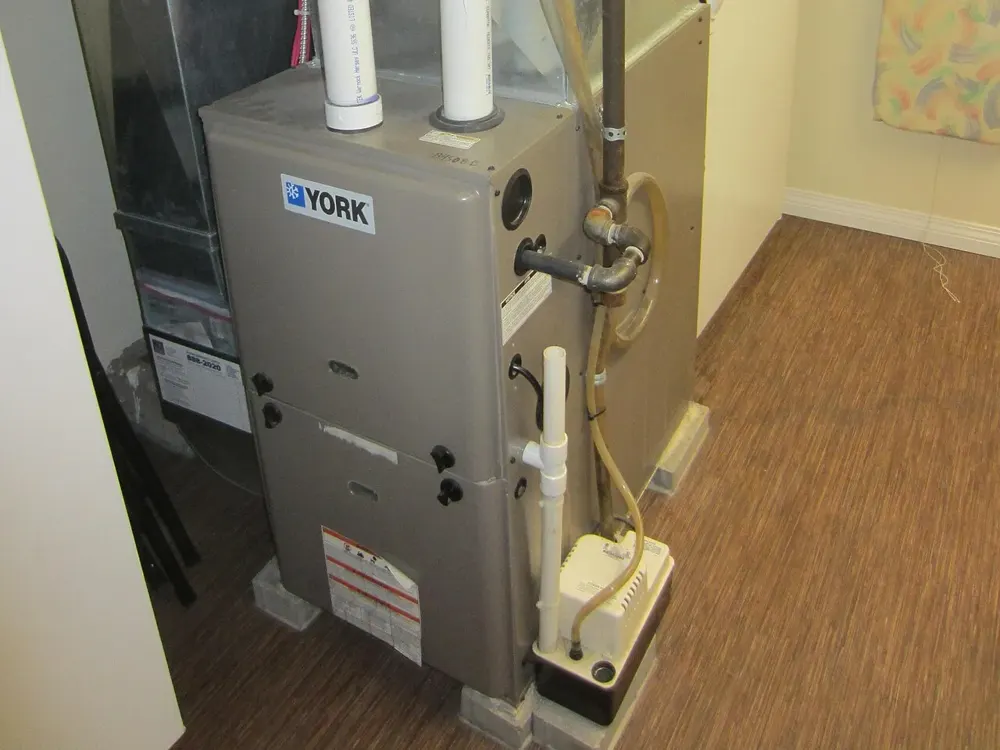
Where the DIY line is: cleaning a sensor and swapping a labeled, matching igniter with the power and gas off are jobs many homeowners do. Diagnosing a gas valve, control board, pressure switch or heat exchanger is not. If you aren't sure which part is at fault, or the part doesn't fix it, call a licensed technician. Also note that condensing high-efficiency furnaces have a drain and sometimes a condensate pump; see the AC condensate drain and float switch guide for the same drain care.
Two HVACDirect parts
Prices were checked on hvacdirect.com on November 15, 2026 and change often. Neither is a guaranteed fit. Confirm your furnace model number, the original part number and the sensor or igniter type before ordering; the SUPCO listing gives no furnace cross-reference.
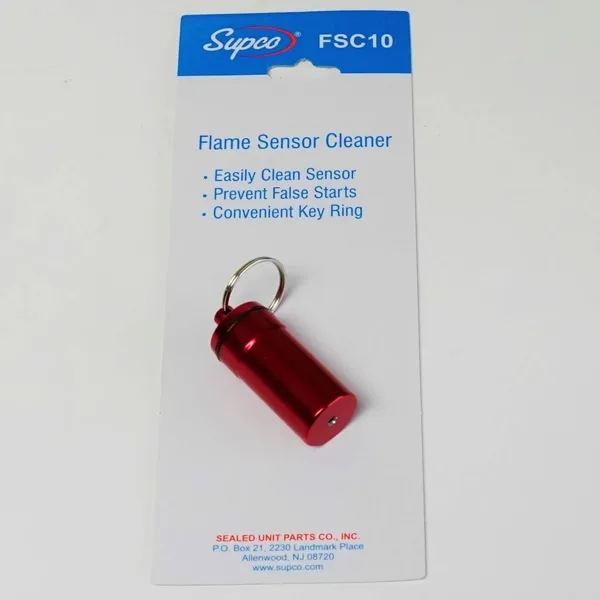
SUPCO Flame Sensor Cleaning Tool (FSC10)
$15.23
A small purpose-made cleaner for a dirty sensor rod, so you don't have to improvise with abrasives. Use it on the rod only, with power and gas off.
View on HVACDirect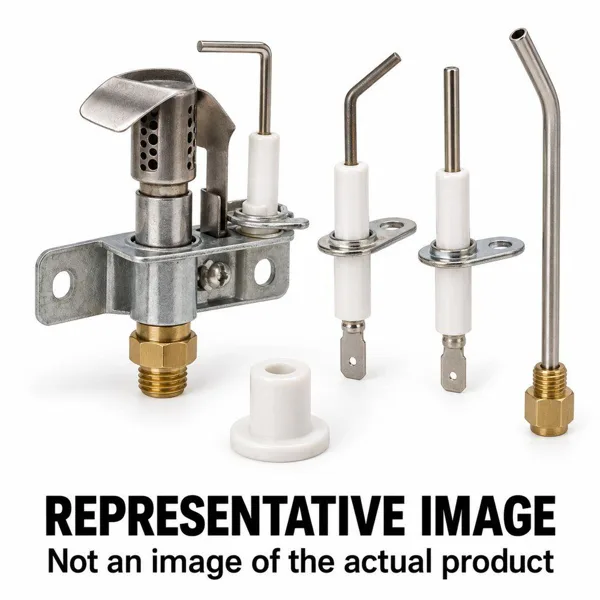
SUPCO Universal Hot Surface Igniter (SSN24)
$49.45
A flat-style universal igniter for furnaces that use a compatible hot surface igniter. HVACDirect describes it only as a flat-style universal igniter, so check shape, plug and voltage against your old part, or ask the seller.
View on HVACDirectHVACDirect links above are affiliate links. HVACDirect's pages say to confirm the exact part number before ordering. We have not tested these parts.
Bottom line
Match the symptom to the step that fails: lights then quits points at flame sensing, no light points at ignition. A sensor cleaning costs little, and an igniter is cheap next to a service call, but both live beside gas and line voltage, so stop at your comfort limit. Keep a clean filter in place to reduce short cycling and extend the life of both parts.
Sources
- Carrier: Furnace flame sensor (symptoms, possible causes, do not bypass the sensor, match the part, professional service)
- Copeland: Cleaning a flame sensor (fine emery cloth preferred over steel wool)
- Transmitter Shop: Furnace flame sensor faults (flame rectification, microamp signal, don't use sandpaper)
- Carrier: Furnace ignitor (fragile, skin oils cause hot spots)
- Bryant: Furnace ignitor (symptoms; other components can cause the same behavior)
- HVAC Repair Desk: Furnace ignitor (match material, shape, plug and voltage; what not to attempt)
- Thermostating: Hot surface igniter (SiC vs SiN, resistance testing)
- HVACDirect product pages for the SUPCO FSC10 and SSN24: prices and listing details (checked November 15, 2026)
Information only; not gas or HVAC service advice. Follow the manufacturer's instructions and local rules, and hire a licensed technician when in doubt.