
AC run capacitor: symptoms, matching the label, and when to call a pro
Affiliate disclosure: HVACDirect is an affiliate partner. Product links below use our affiliate tracking and may earn a commission at no extra cost to you. We have not hands-on tested these parts; prices and listing details are from HVACDirect's product pages as of November 14, 2026. See our affiliate disclosure.
Last reviewed: November 14, 2026.
- A bad run capacitor often shows up as an outdoor unit that hums but the fan or compressor won't start.
- A replacement must match the original microfarad (µF) value exactly and have a voltage rating equal to or higher than the old one (440 V can replace 370 V, never the reverse).
- A capacitor can hold a dangerous charge after the power is off. If you have not been trained to discharge and test one, hire an HVAC technician. The part is cheap; the labor is for safety.
A run capacitor gives an AC condenser fan motor or compressor the electrical boost it needs to start and run efficiently. It is one of the most common parts to wear out, especially in hot weather. This guide explains the symptoms, how to read the label, and where the DIY line is, so you can either buy the right part or have an informed conversation with a tech.
1. Common signs of a failing capacitor
- The outdoor unit hums or buzzes but the fan does not turn, or the fan only spins if pushed.
- The indoor blower runs but the air is warm, or cooling is intermittent.
- The compressor clicks, tries to start, then shuts off. The breaker may trip at startup.
- A domed, bulging or leaking case. A healthy capacitor has a flat top.
- Failures that show up on the hottest afternoons, because heat speeds up wear.
Keep in mind a capacitor can look normal and still measure out of spec, and the same symptoms can come from a bad contactor, motor or compressor. Don't diagnose by appearance alone.
2. Reading the label: what a replacement must match
| Label item | Example | Replacement rule |
|---|---|---|
| Capacitance (µF or MFD) | 45/5 µF | Same value(s). A dual capacitor has two numbers: the larger is typically for the compressor (HERM) and the smaller for the fan. |
| Voltage | 370 V or 440 V | Equal or higher. 440 V can replace 370 V; a 370 V part must never replace a 440 V one. |
| Terminals | HERM / FAN / C (dual) or two terminals (single) | Same configuration, or wire two singles correctly. |
| Size and shape | Round or oval | Must fit the mounting strap snugly so it can't slide and short the terminals. |
Why exact µF matters: a value that is too low can keep the motor from starting or leave it hesitating under load, and one that is too high can cause extra heat and strain on the windings. Run capacitors are commonly made with a tolerance of about ±5 to 6 percent, and Alabama Cooperative Extension guidance says a run capacitor should measure within ±10 percent of its stated value or be replaced. Note that start capacitors (used briefly to help a compressor start) are a different part with a different rating, so don't swap one for the other.
3. The safety line: discharge, test, and know your limits
- Turn off power at the disconnect and the breaker. Then wait; the capacitor can still hold a charge.
- Technicians discharge each terminal pair with a properly rated resistor (often a 20,000-ohm, 5-watt resistor) and confirm near-zero voltage before touching anything. Skipping this can cause a harmful shock (Ferguson and Alabama Extension both stress it).
- Testing capacitance needs a capacitance-capable meter. Some multimeters give unreliable capacitor readings.
- Photograph the wiring before you disconnect anything, and move one wire at a time.
DIY or call a pro? If you are comfortable with electrical safety and the unit is a simple single-capacitor swap, replacing the part is a common DIY job. If you have never discharged a capacitor, see scorching or burnt wires, or the replacement doesn't fix the problem, call a licensed HVAC technician. HVACDirect's own part pages note that installation and diagnosis should be done by a qualified HVAC professional.
Two capacitor listings (HVACDirect)
Prices were checked on hvacdirect.com on November 14, 2026 and change often. Neither is a universal fit for every unit. Match your old capacitor's label before ordering.
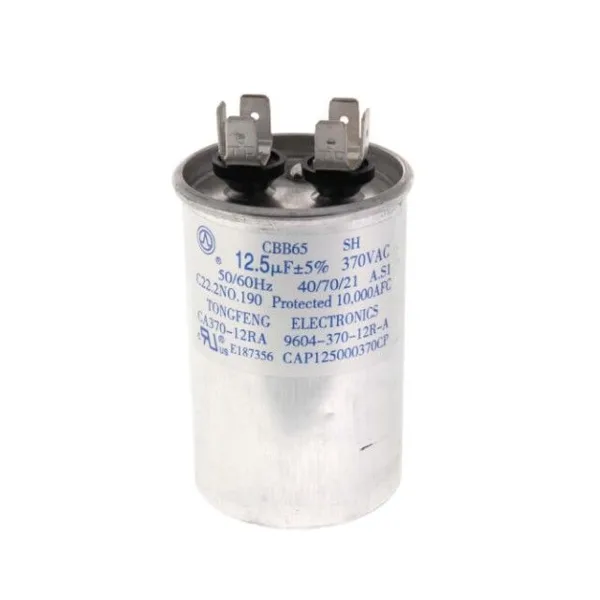
Goodman Run Capacitor 12.5 µF / 370 V (CAP125000370RPP)
$12.95
A low-cost OEM run capacitor. HVACDirect lists it for specific Goodman and Amana gas furnaces (blower motor); check the compatible-model list on the page against your furnace's model number.
View on HVACDirect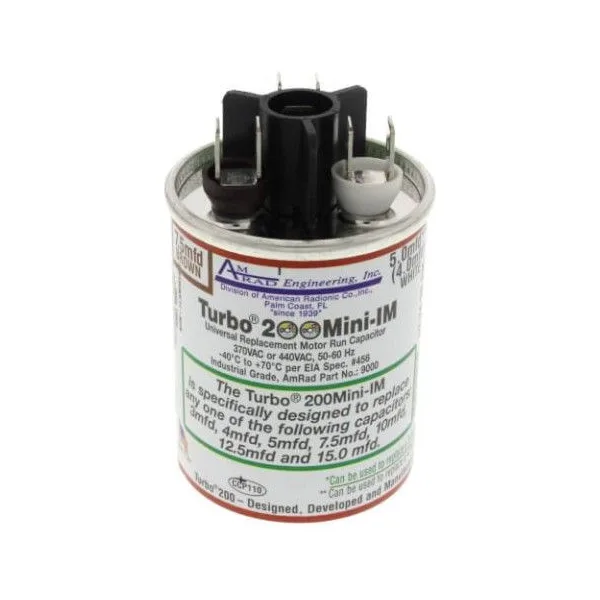
Carrier TURBO200MINI Universal Run Capacitor
$13.95
A universal replacement run capacitor (about 2.1 x 3.4 x 2.2 in per the listing). The listing gives no model cross-reference or µF rating, so confirm the rating and compatibility with your unit's label before you buy.
View on HVACDirectHVACDirect links above are affiliate links. HVACDirect's pages say to confirm the full equipment model, serial number and original part number before ordering. We have not tested these parts.
Bottom line
A failing capacitor is usually a cheap fix once confirmed, but the shock risk is real. Match the label (µF exactly, voltage equal or higher), and if you aren't set up to discharge and test it safely, let a technician do it. While you're at it, keep the drain and condensate system healthy with our AC condensate drain and float switch guide, and see our furnace AFUE guide if an older furnace is next on your list.
Sources
- Alabama Cooperative Extension: Testing a Motor Capacitor (±10% run capacitor tolerance, matching µF, voltage rules, sizing)
- Ferguson: The Ultimate AC Capacitor Guide (symptoms, µF and voltage matching, discharge warning)
- HeatCool: Testing Capacitors (run vs start, dual terminals HERM/FAN/C, voltage rule)
- Imperial AC Supply: AC Capacitor Troubleshooting Guide (symptoms, exact µF match)
- HVACDirect product pages for the Goodman CAP125000370RPP and Carrier TURBO200MINI: prices and listing details (checked November 14, 2026)
Information only; not electrical or HVAC service advice. Follow the manufacturer's instructions and local rules, and hire a licensed technician when in doubt.