
AC condensate drain guide: clogs, float switches and condensate pumps
Affiliate disclosure: HVACDirect.com is an affiliate partner. Product links below use our affiliate tracking and may earn a commission at no extra cost to you. Use code TBZOQ3JUBY0G at checkout for an affiliate program product discount (about 3%; confirm on hvacdirect.com). We have not hands-on tested these products; specs and prices are summarized from HVACDirect listings and manufacturer documents as of November 8, 2026. See our affiliate disclosure.
Last reviewed: November 8, 2026.
Every central air conditioner and heat pump in cooling mode pulls water out of the air. That water drips off the indoor coil into a drain pan and has to leave the house through a condensate line. A high-efficiency (condensing) furnace makes its own condensate in winter too. When that small drain plugs with dust, sludge or algae, the water has nowhere to go. ENERGY STAR's maintenance checklist puts it plainly: a plugged condensate drain can cause water damage in the house and affect indoor humidity levels.
This guide explains how the drain system works, the backup protection building codes expect where an overflow could do damage, when a condensate pump is needed, and the simple checks a homeowner can do between professional tune-ups. It is written for typical homes nationwide. It does not walk you through electrical wiring; float switches and pumps tie into equipment controls or line voltage, and that work belongs with a licensed HVAC contractor.
1. How the condensate system works
Warm, humid house air crosses the cold evaporator coil. Moisture condenses on the fins, runs into the coil's drain pan, and leaves through a primary drain line, usually ¾-inch PVC. Where the equipment sits above a floor drain, a laundry standpipe or an outdoor discharge point, gravity does the work. The International Residential Code (IRC) section on auxiliary and secondary drains calls for drain piping of at least ¾-inch nominal size with a slope of at least ⅛ inch per foot toward the discharge.
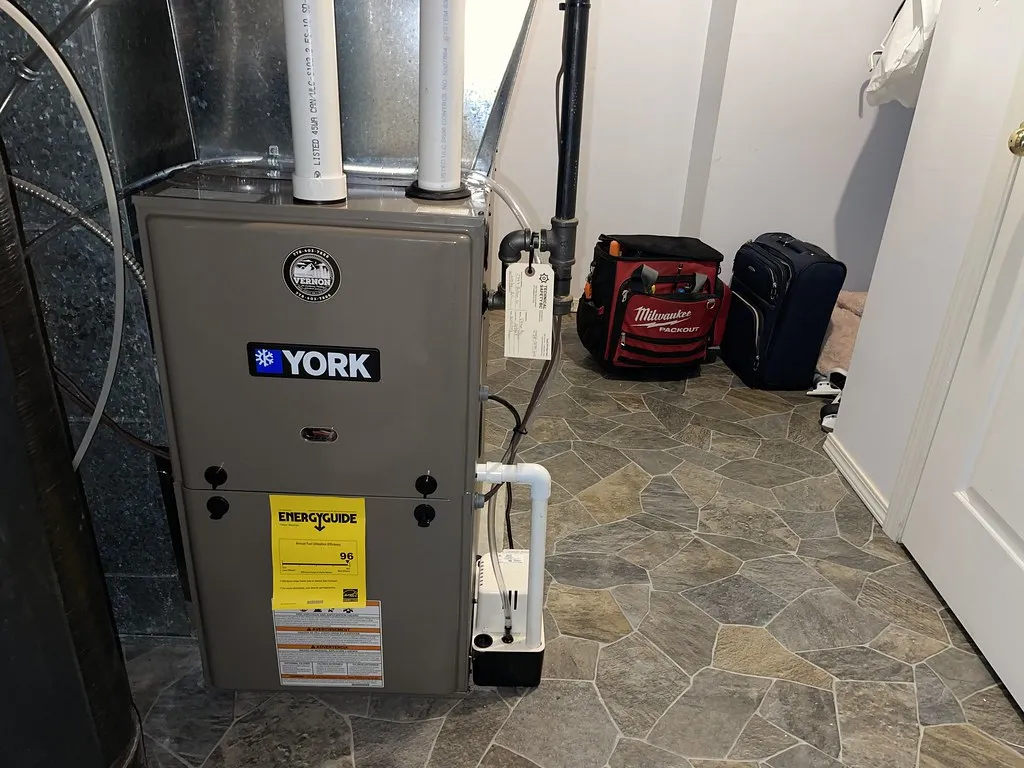
Where gravity cannot get the water out—a basement furnace below the sewer line, an air handler in a closet with no nearby drain—a condensate pump collects it and pushes it up and out through small tubing. Condensing furnaces send their own acidic condensate the same way, which is why pump makers list which models are rated for furnace condensate.
2. Why drains clog and what the warning signs look like
A cooling coil runs cold and wet for months. Dust that slips past a loose or dirty filter lands on that wet surface and washes into the pan and line, where it can mix with biological growth into a slime that narrows the pipe. ENERGY STAR lists a condensate-drain check as part of a normal pre-season tune-up and recommends inspecting or changing the air filter monthly, which also limits how much debris reaches the coil. The U.S. Department of Energy's cooling tips note that a unit's drain channels can clog and suggest occasionally passing a stiff wire through them.
Warning signs worth acting on:
- Water in the secondary (auxiliary) pan under an attic or closet air handler. That pan is a backup, not a normal drain path.
- Water dripping from a secondary drain outlet over a window or eave. Codes route that line to a conspicuous spot precisely so you notice it.
- The AC shutting off on a warm, humid day while the thermostat still calls for cooling—often a float switch doing its job.
- A condensate pump that hums, runs constantly, or has standing water above its normal level.
- Musty smell near the indoor unit, or a water stain on a ceiling below an attic unit.
3. The four backup methods codes recognize
IRC section M1411 (numbered M1411.3.1 in some editions and M1411.9.1 in others) says a secondary drain or auxiliary drain pan is required for each cooling or evaporator coil where damage to any building components will occur if the primary pan overflows or the drain plugs. It then lists four acceptable methods:
- Auxiliary pan with its own drain. A pan under the unit, at least 1.5 inches deep and at least 3 inches larger than the unit in width and length, draining to a conspicuous point so occupants notice a stoppage.
- Separate overflow drain line from the equipment's own pan, connected higher than the primary drain and discharging to a conspicuous point.
- Auxiliary pan without a separate drain, fitted with a water-level detection device conforming to UL 508 that shuts the equipment off before the pan overflows.
- A UL 508 water-level detection device in the primary drain line, the overflow line, or the equipment-supplied pan—above the primary drain connection and below the pan rim—that shuts the equipment off if the primary drain is blocked.
The same code adds that on downflow units and other coils with no provision for a secondary drain or auxiliary pan, a water-level monitoring device must be installed inside the primary drain pan, not in the drain line. Connecticut's state building inspector issued a 2025 advisory noting that these rules apply to ductless mini-split indoor units too, because they also have evaporator coils, with the local building official deciding whether an overflow at that location would damage building components. Your jurisdiction's adopted code edition and amendments control, so check with the local building department or your HVAC contractor.
A float switch (the common name for that water-level detection device) does not fix a clog. It turns the cooling off so the overflow stops while you get the drain cleared. That trade—a warm afternoon instead of a wet ceiling—is the whole point.
4. When you need a condensate pump
A pump is the answer when the drain point is above the equipment or too far away for a gravity slope. Typical cases are basement furnaces with an AC coil on top, condensing furnaces in a basement, and closet air handlers on slab with no nearby drain. Things to compare:
- Lift. Pumps are rated by maximum lift (shutoff head). Flow drops as lift rises. Beckett's spec sheet for its CL20 low-profile pump, for example, lists 149 gallons per hour at 1 foot of lift falling to 49 at 20 feet.
- Height and footprint. Low-profile pumps exist for counterflow furnaces and tight spaces where the coil drain sits close to the floor. The pump inlet has to be below the coil drain so water can fall into it.
- Built-in safety switch. Many pumps include a second float that can shut off the AC or trigger an alarm if the pump fails. It only protects you if it is actually wired into the equipment control circuit or an alarm.
- Furnace condensate. Condensing-furnace condensate is acidic. Use a pump the maker says can handle it, and follow both the furnace and pump instructions. Beckett's CL20 manual, for instance, says not to tee an evaporator coil drain together with a furnace condensate drain.
- Discharge routing. Beckett's manual says to run the discharge tubing up no more than 17 feet to the highest point, then slope it down toward the drain so water does not flow back.
5. Simple homeowner checks (no wiring)
- Change or inspect the air filter on schedule. A clean filter keeps debris off the wet coil. Our filter sizes and MERV guide covers sizing.
- Find where your primary drain and any secondary drain discharge outside or indoors. Know what "normal" looks like so a drip in the wrong place stands out.
- At the start of cooling season, look in the auxiliary pan under an attic or closet unit. It should be dry.
- If your pump has a test button or lever, use it as the manufacturer describes to confirm the pump runs and water leaves through the discharge.
- Many indoor units have a capped cleanout tee on the drain. Ask your HVAC contractor during the annual tune-up to show you how your system's cleanout works and what, if anything, they recommend putting down it. Follow the equipment maker's instructions rather than general tips.
- Turn the power off at the service switch before reaching into a drain pan or opening a pump, and leave float-switch wiring to a professional.
Curated drain-protection picks (2)
Two HVACDirect products, both under $100. Prices were checked on the live HVACDirect listings on November 8, 2026 and change often.
- Rectorseal Safe-T-Switch SS3, $29.95 on hvacdirect.com (shown marked down from $35.63). HVACDirect describes it as an added safeguard for condensate drain lines to prevent flooding from clogs, with a water-sealed reed-and-magnet switch that complies with UL 508—the standard the code's water-level detection options reference. It is a low-cost way to add method 4 above where the drain layout suits it. Confirm the mounting location and wiring in Rectorseal's instructions with your HVAC contractor; it needs to be wired into the equipment's control circuit to shut the system off. Use code TBZOQ3JUBY0G at checkout.
- Beckett 20′ Lift Low Profile Condensate Pump (CL201UL), $49.95 on hvacdirect.com. HVACDirect lists a 115V, UL/cUL-listed low-profile pump with up to 20 feet of lift, 149 GPH at 1 foot, a dual-float design and a 6-foot cord, pitched for tight spots such as counterflow furnaces. Beckett's spec sheet adds a 0.85-quart tank, a built-in safety switch, a check valve, a 3/8-inch barbed discharge, and suitability for acidic condensate from condensing furnaces, with a 150°F maximum water temperature. Use code TBZOQ3JUBY0G at checkout.
Prices and specs come from HVACDirect listings and Beckett documents and can change. Confirm the current price, lift, voltage and switch rating before you buy, and have a licensed contractor install anything that connects to equipment controls or line voltage.
Where this fits in the house
Condensate is a side effect of the cooling and heating equipment itself. If you are replacing that equipment, start with central AC vs DIY mini-split, the heat pump sizing guide and the furnace AFUE guide, which covers condensing-furnace drains. A float switch protects one appliance; for water heaters and under-sink equipment, see the leak detection picks on the Products page. HVAC drain picks are listed under Heat pumps & furnaces.
Bottom line
A condensate drain is a cheap part that can cause expensive damage when it plugs. Keep filters clean, know where your primary and secondary drains discharge, and make sure any unit in an attic, closet or above a finished ceiling has one of the code's backup methods—an auxiliary pan, an overflow line, or a UL 508 float switch that shuts the system off. If the water has to go up, use a condensate pump with a safety switch that is actually wired to stop the equipment.
Sources
- ENERGY STAR: Maintenance Checklist (check the condensate drain; plugged drain can cause water damage and affect humidity; monthly filter checks)
- U.S. Department of Energy: Tips for Lowering Your Cooling Costs (PDF) (clogged drain channels; stiff wire)
- IRC M1411: Auxiliary and Secondary Drain Systems (UpCodes) (four methods; pan sizes; UL 508 water-level devices; ¾-inch pipe and ⅛-inch-per-foot slope; downflow units)
- Connecticut State Building Inspector Advisory 25-01: Condensate Disposal for Ductless Mini-splits
- Beckett CL20 low-profile condensate pump spec sheet (PDF) and user manual (PDF)
- HVACDirect listings for the Rectorseal SS3 and Beckett CL201UL: specs and prices (checked November 8, 2026)
Information only; not HVAC, electrical or code advice. Have a licensed HVAC contractor install float switches and condensate pumps to local code and the manufacturers' instructions. Turn off power before working near HVAC equipment.